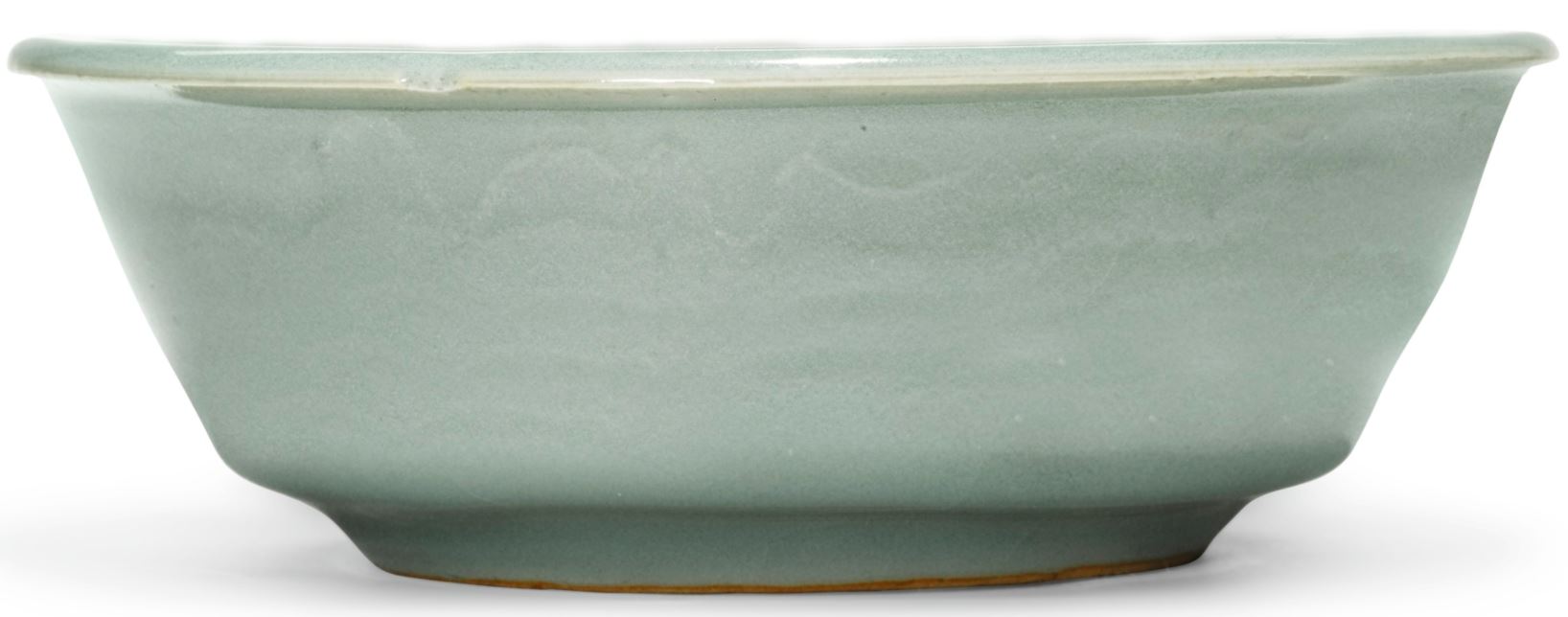
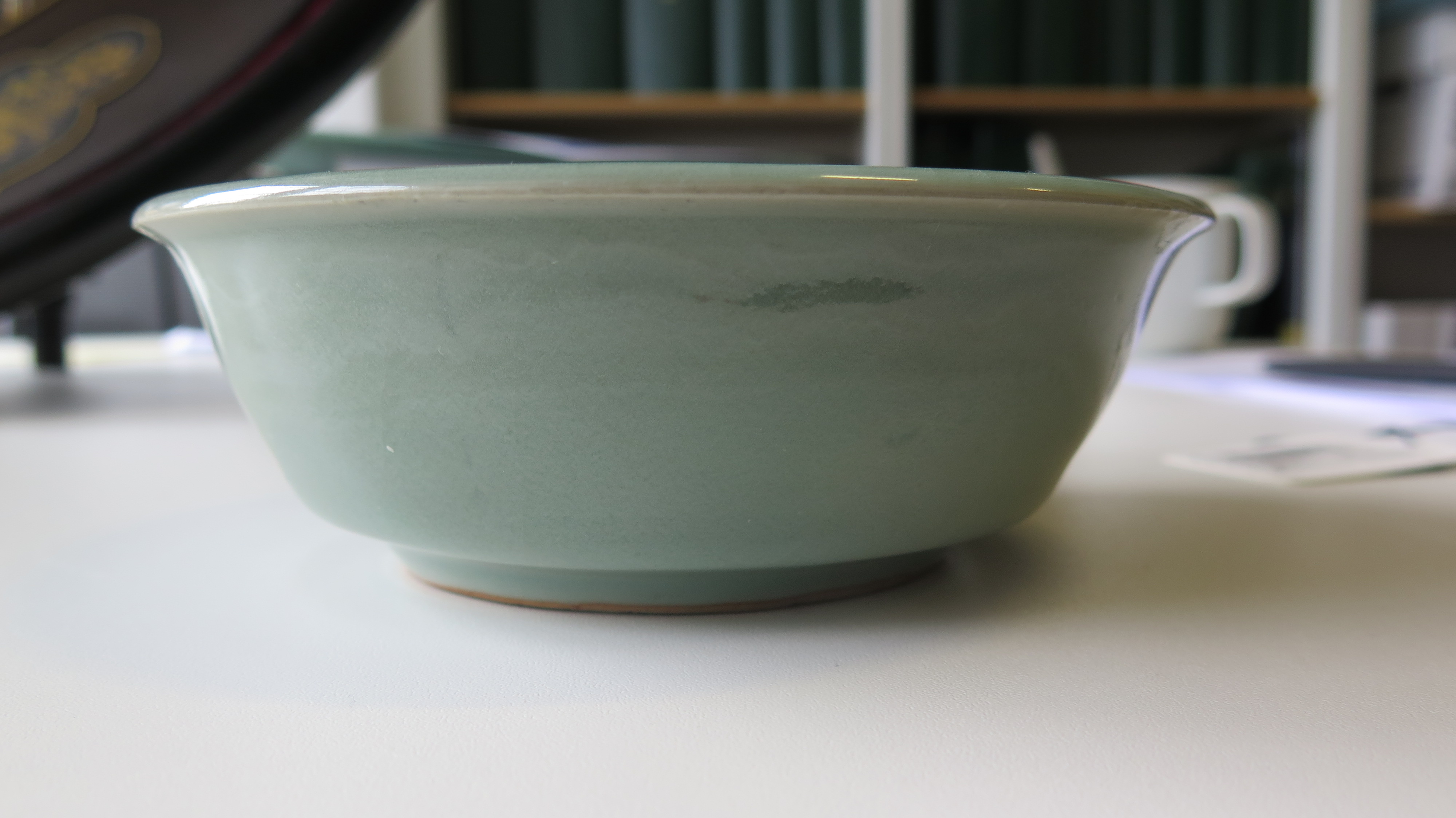
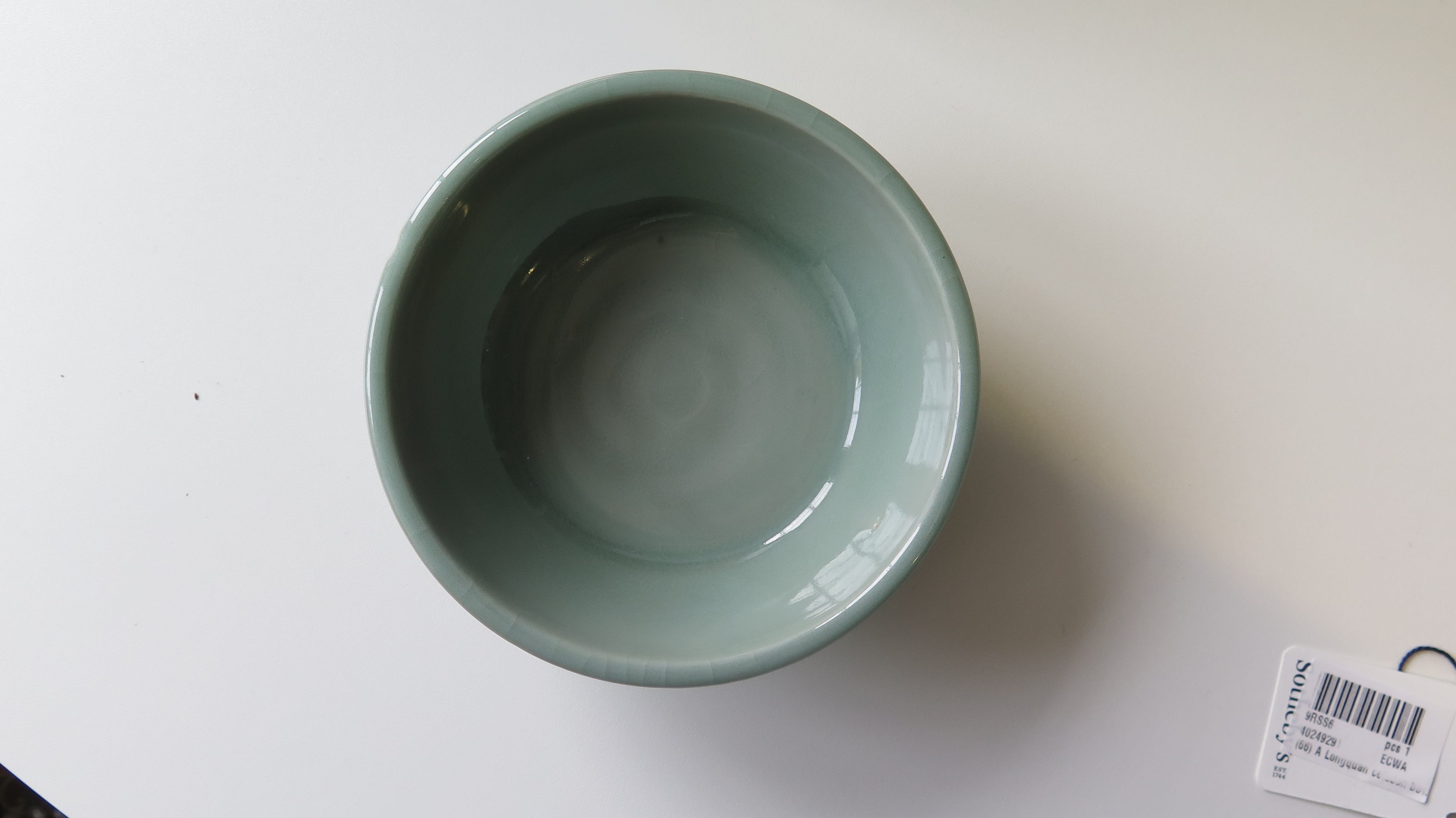
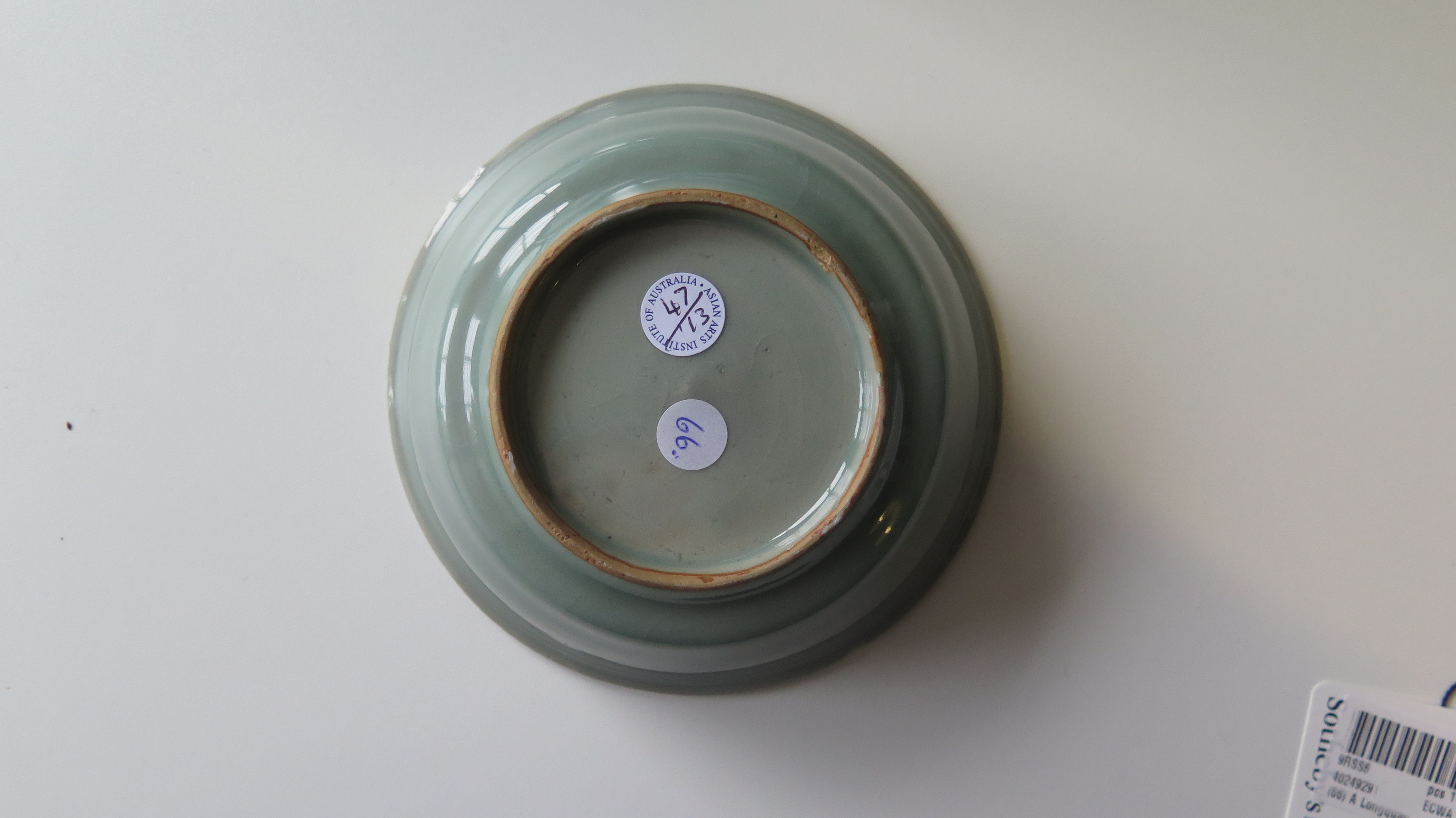
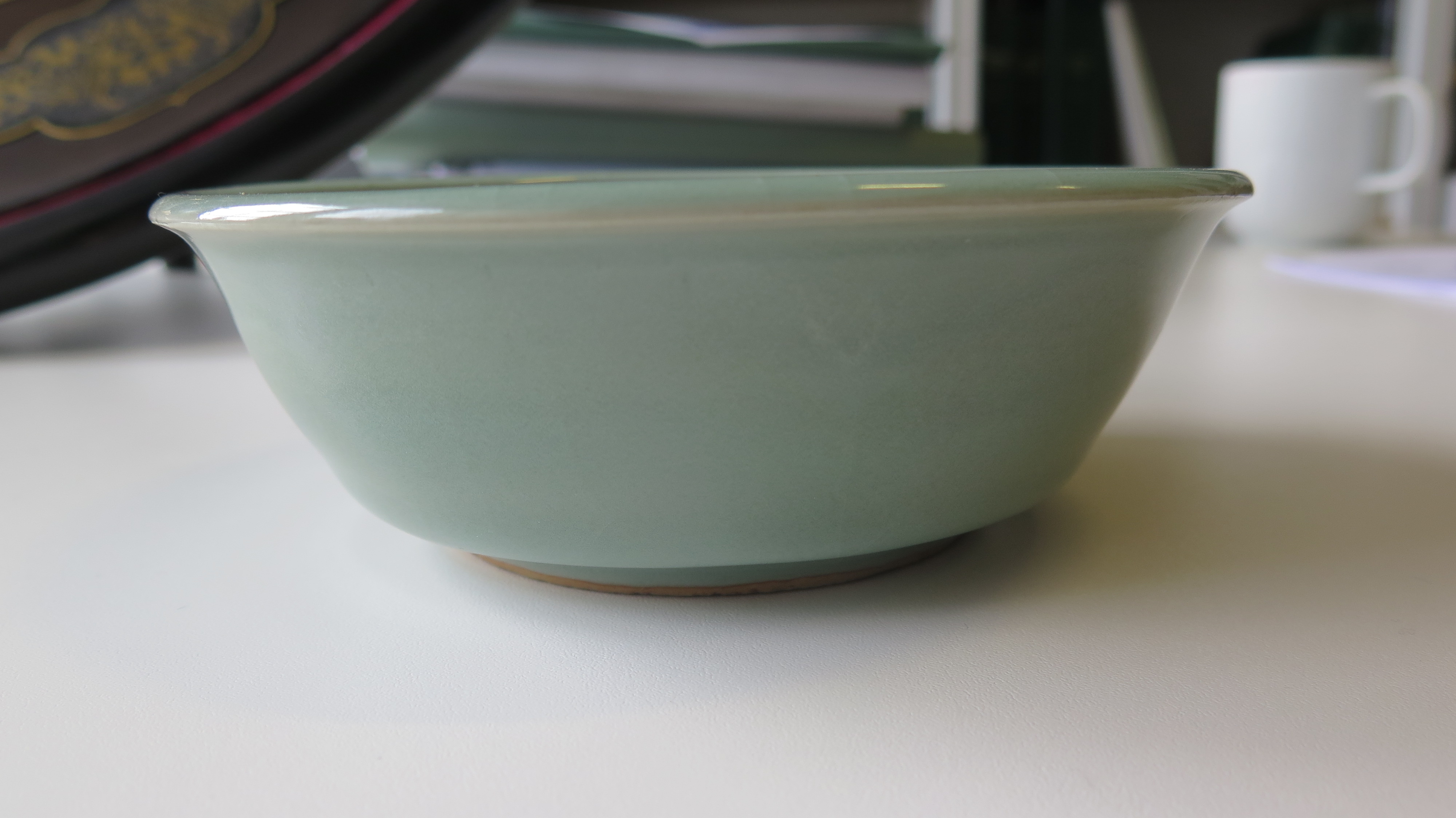
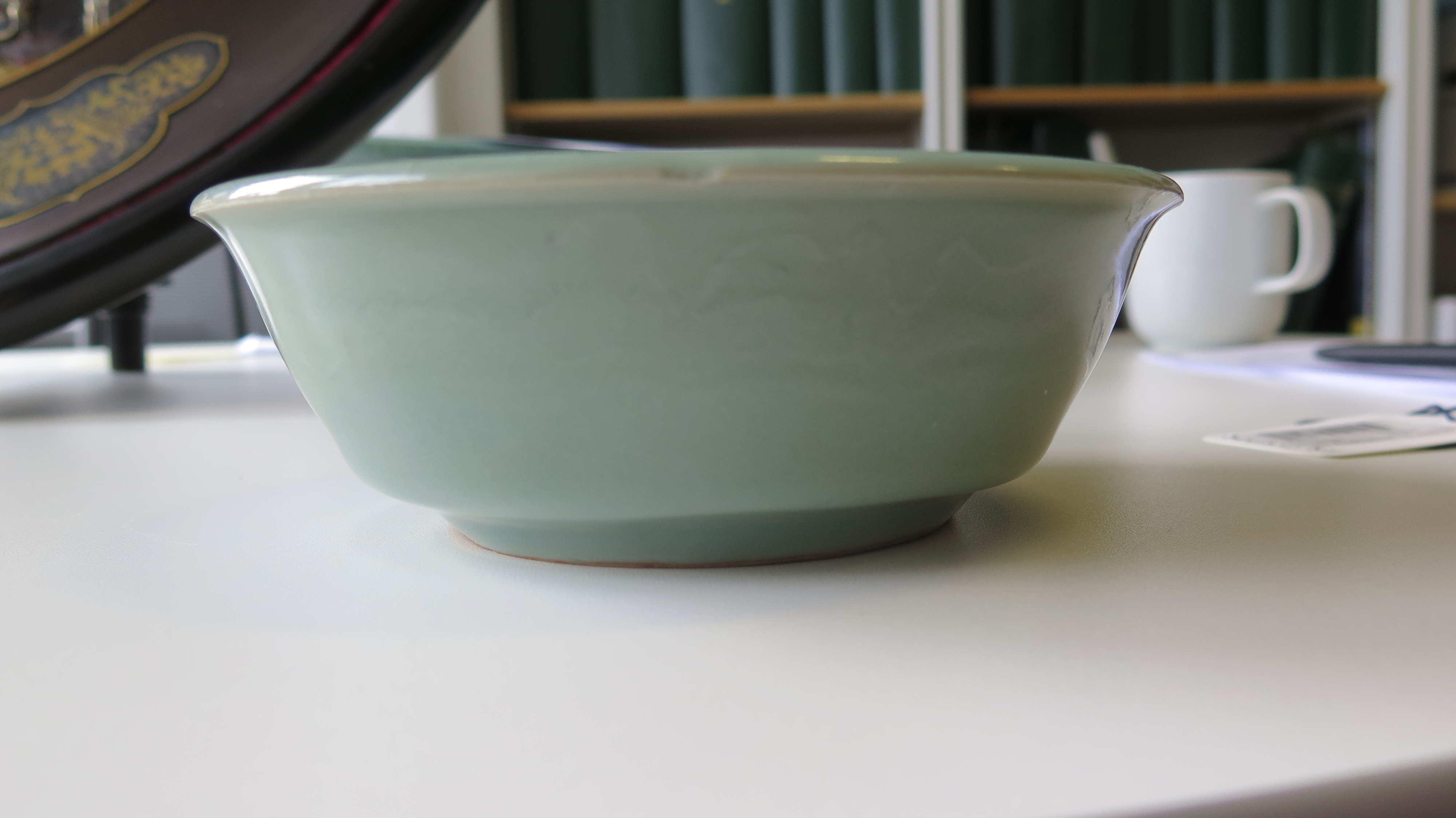
the deep slightly rounded sides rising from a short tapering foot to an everted rim, covered overall in a bluish-green glaze 13.5 cm, 5 3/8 in.
The washer is in very good condition with the exception of some minor glaze firing imperfections including an iron-spot and burst glaze bubble to the interior a 5mm., depression at the rim, light glaze crazing and light glaze scratches.
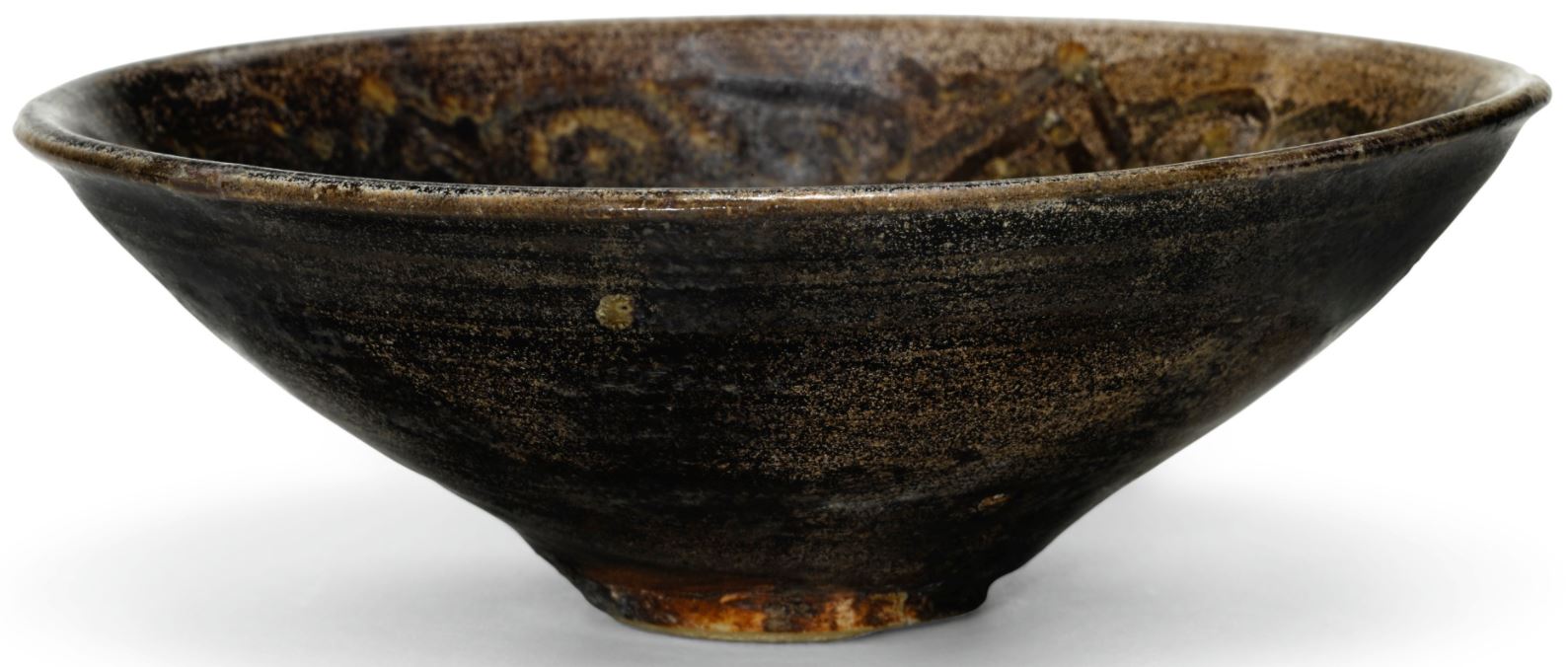
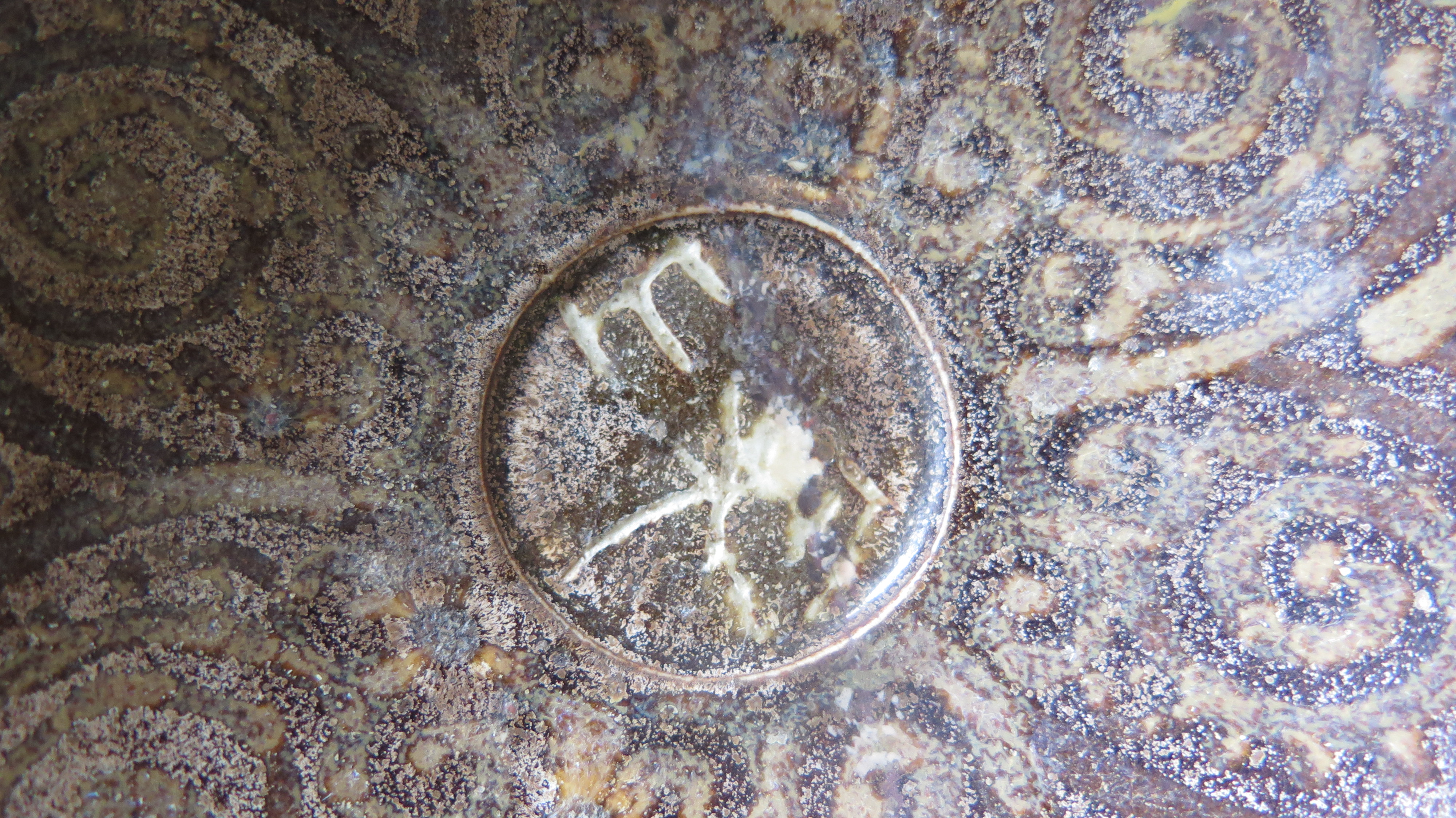
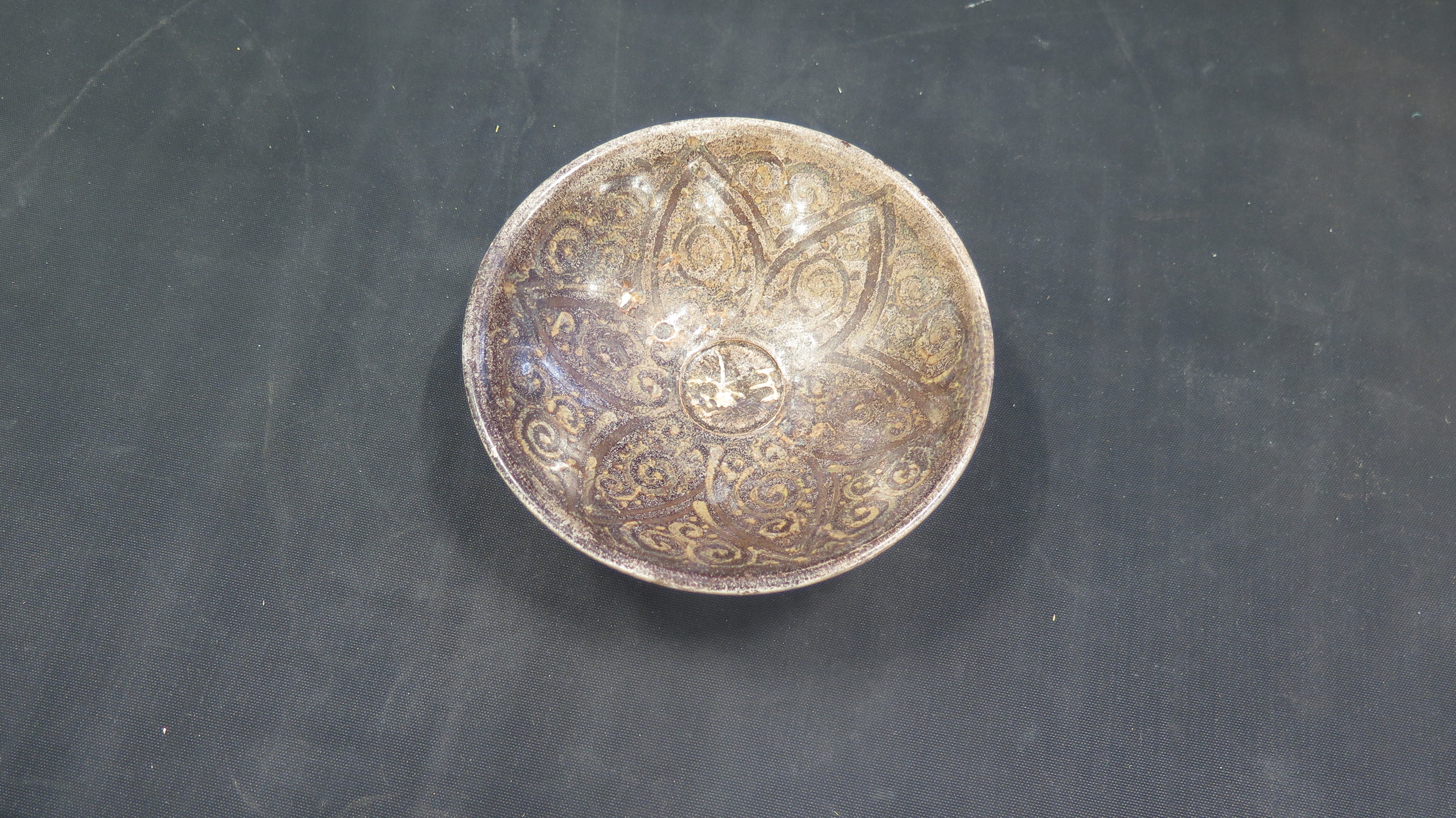
the deep flaring sides rising from a short narrow foot to an everted rim, decorated to the interior with a medallion enclosing a two-character inscription, the well decorated in imitation of guri lacquer in a light buff colour reserved on dark brown 14.2 cm, 5 5/8 in.
This rare bowl has been broken into five pieces and restored.
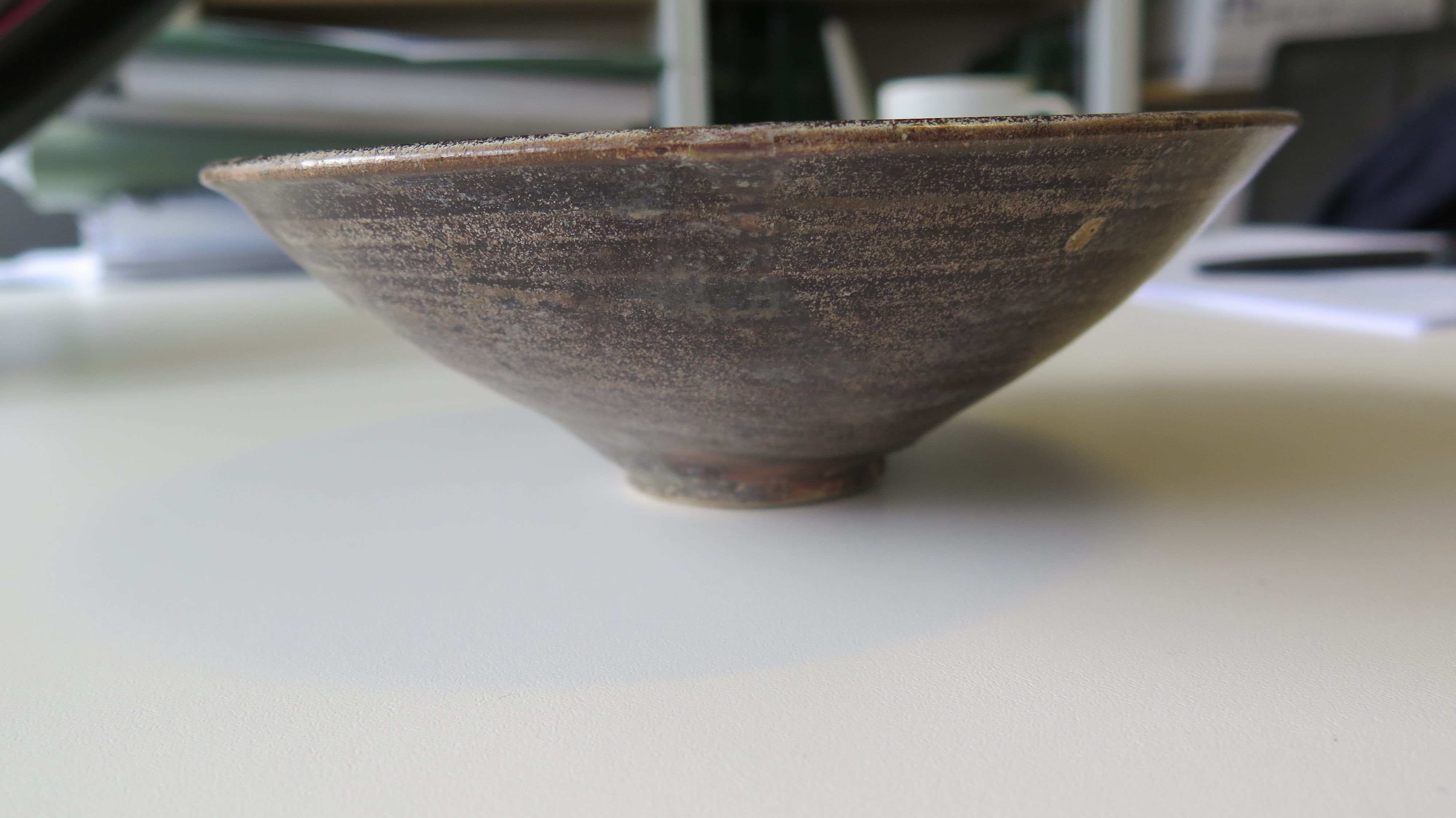
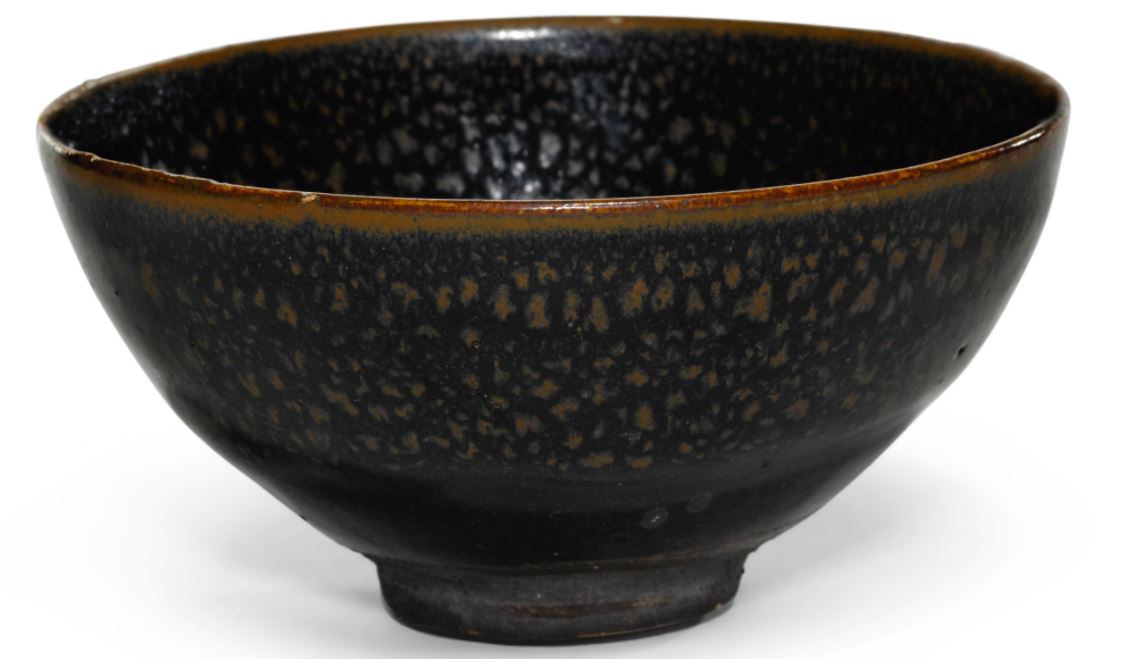
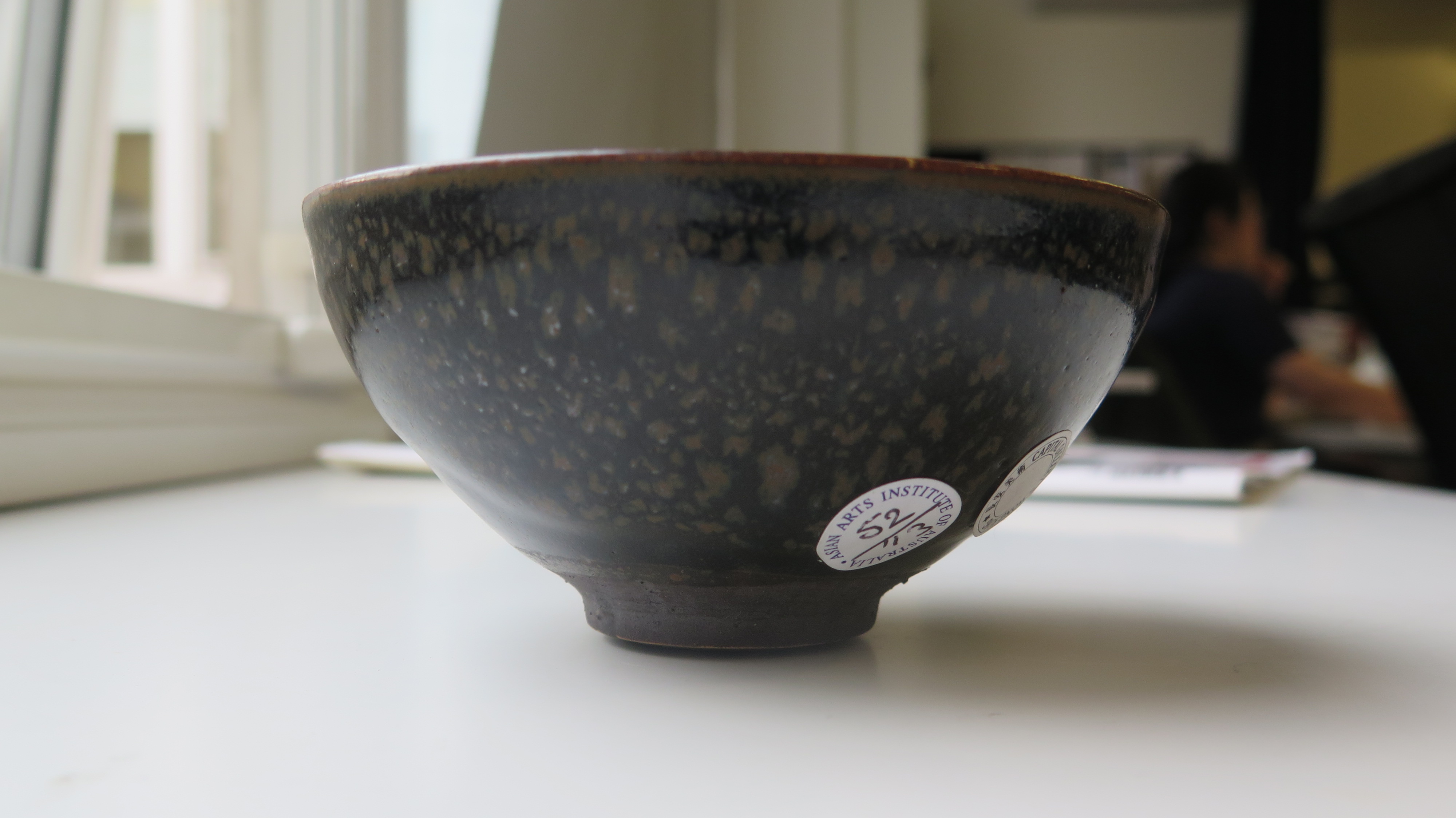
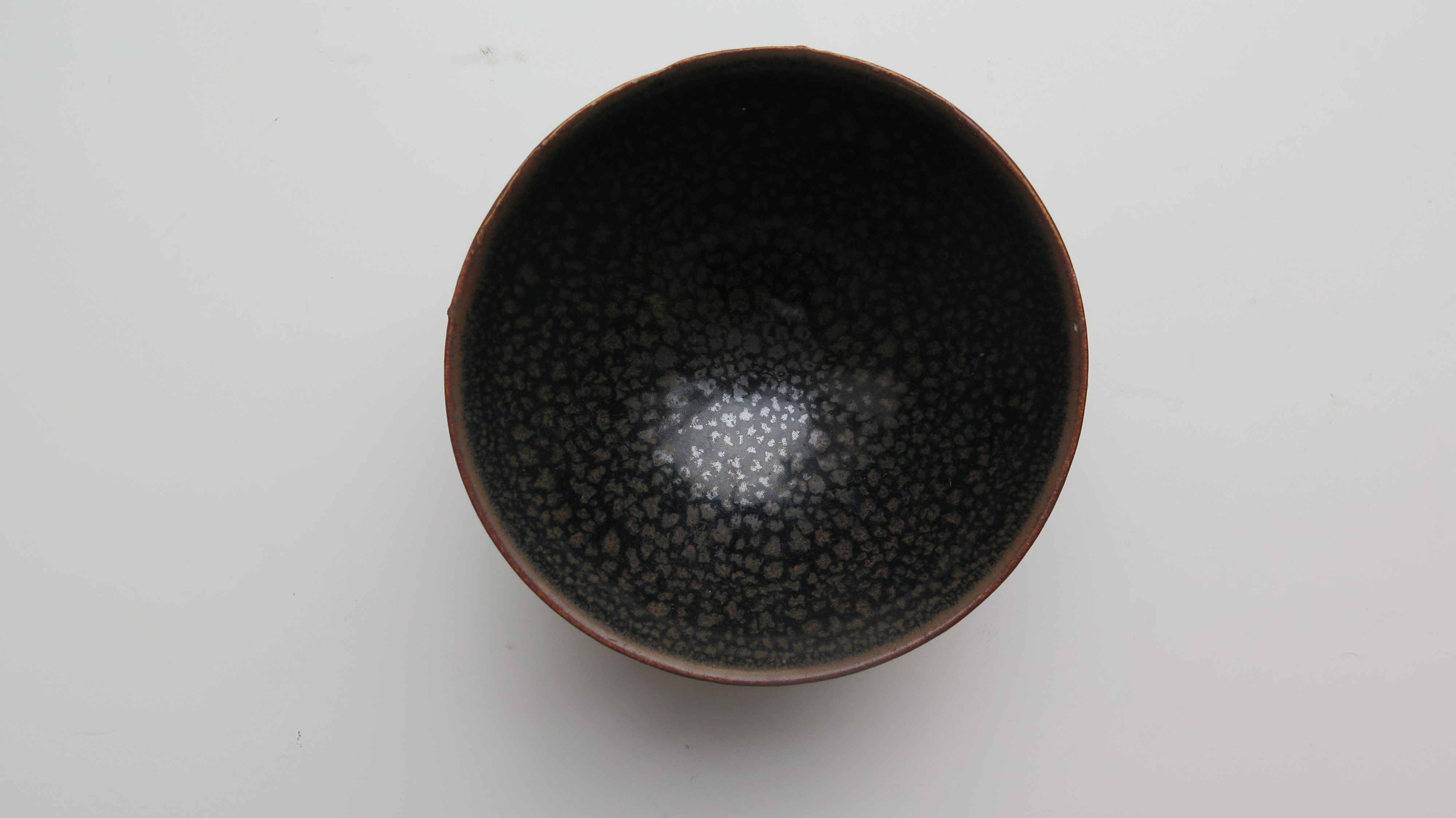
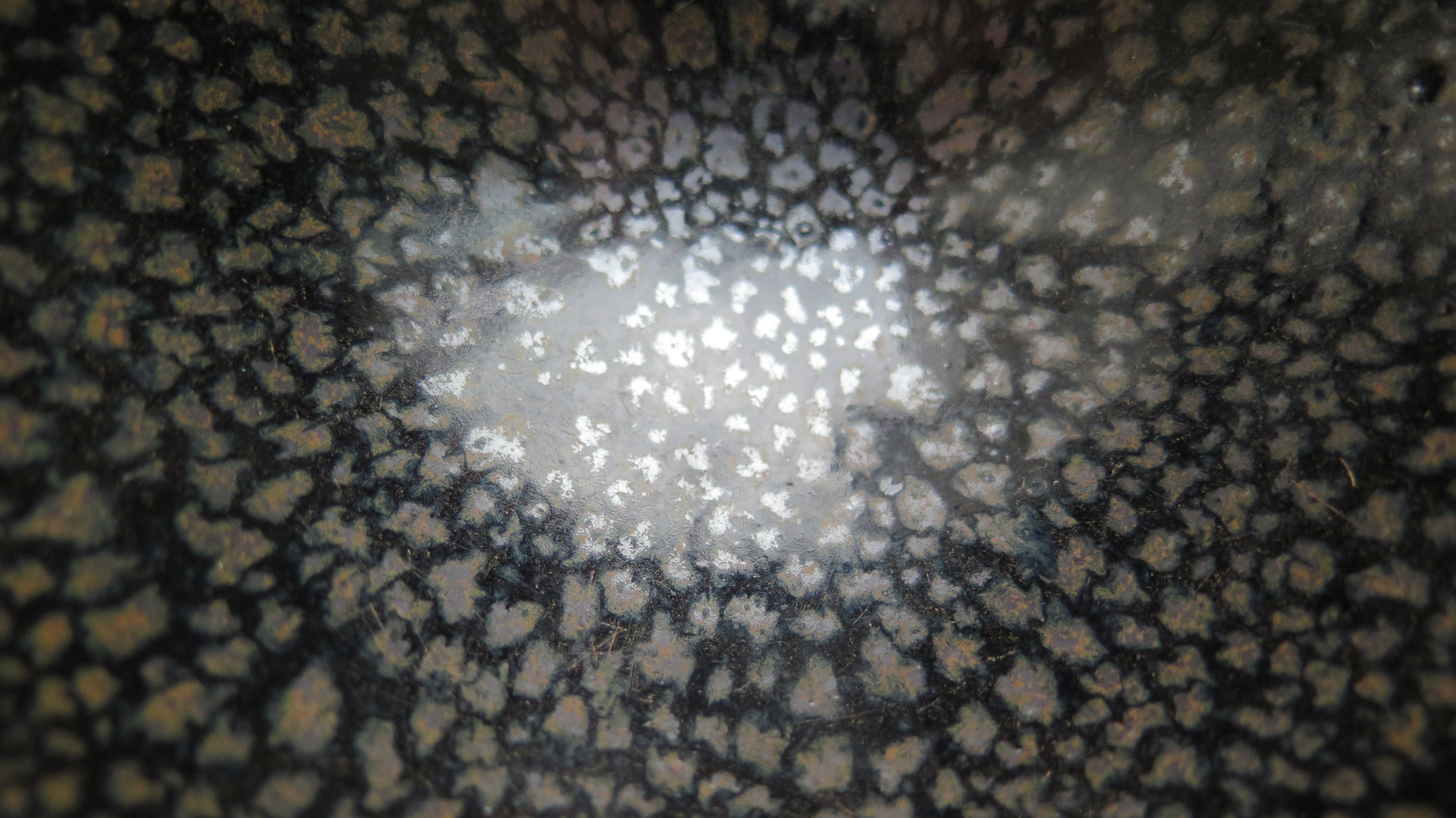
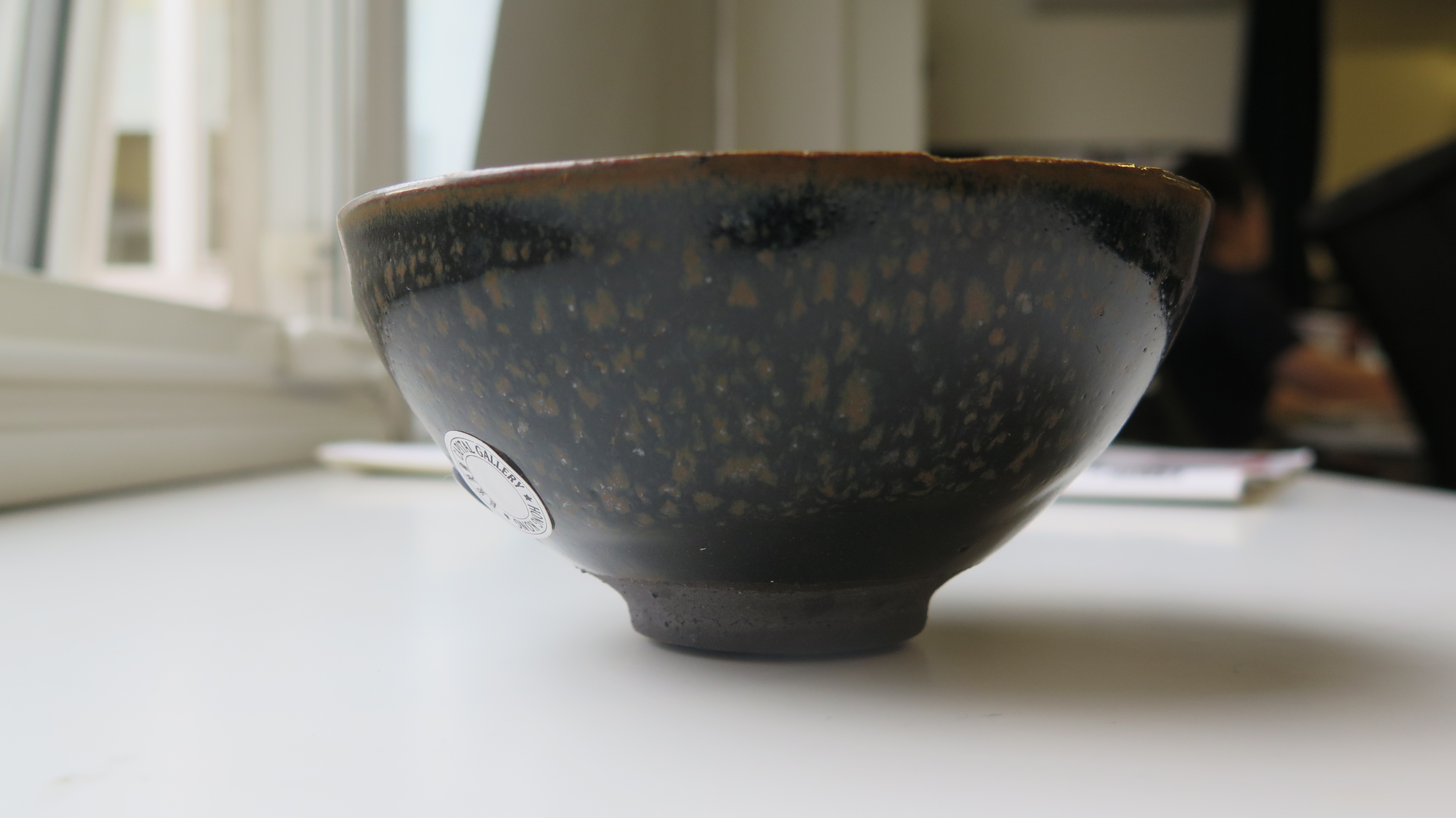
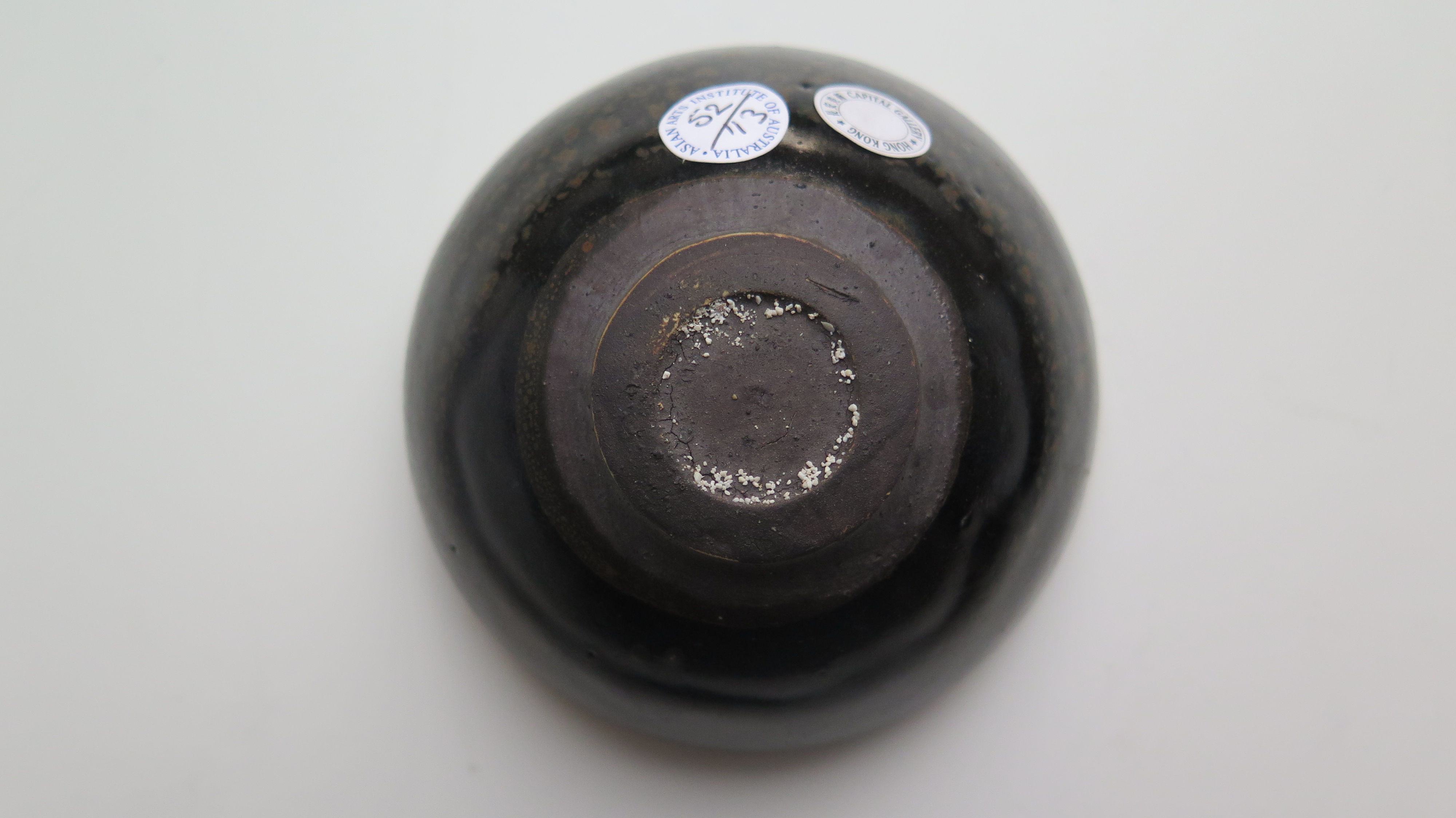
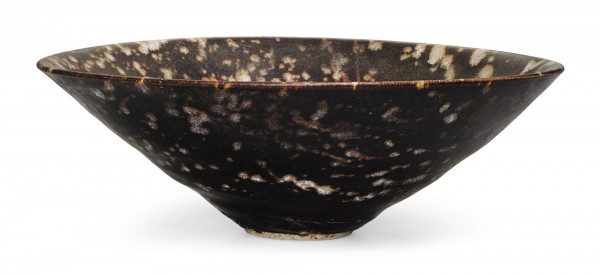
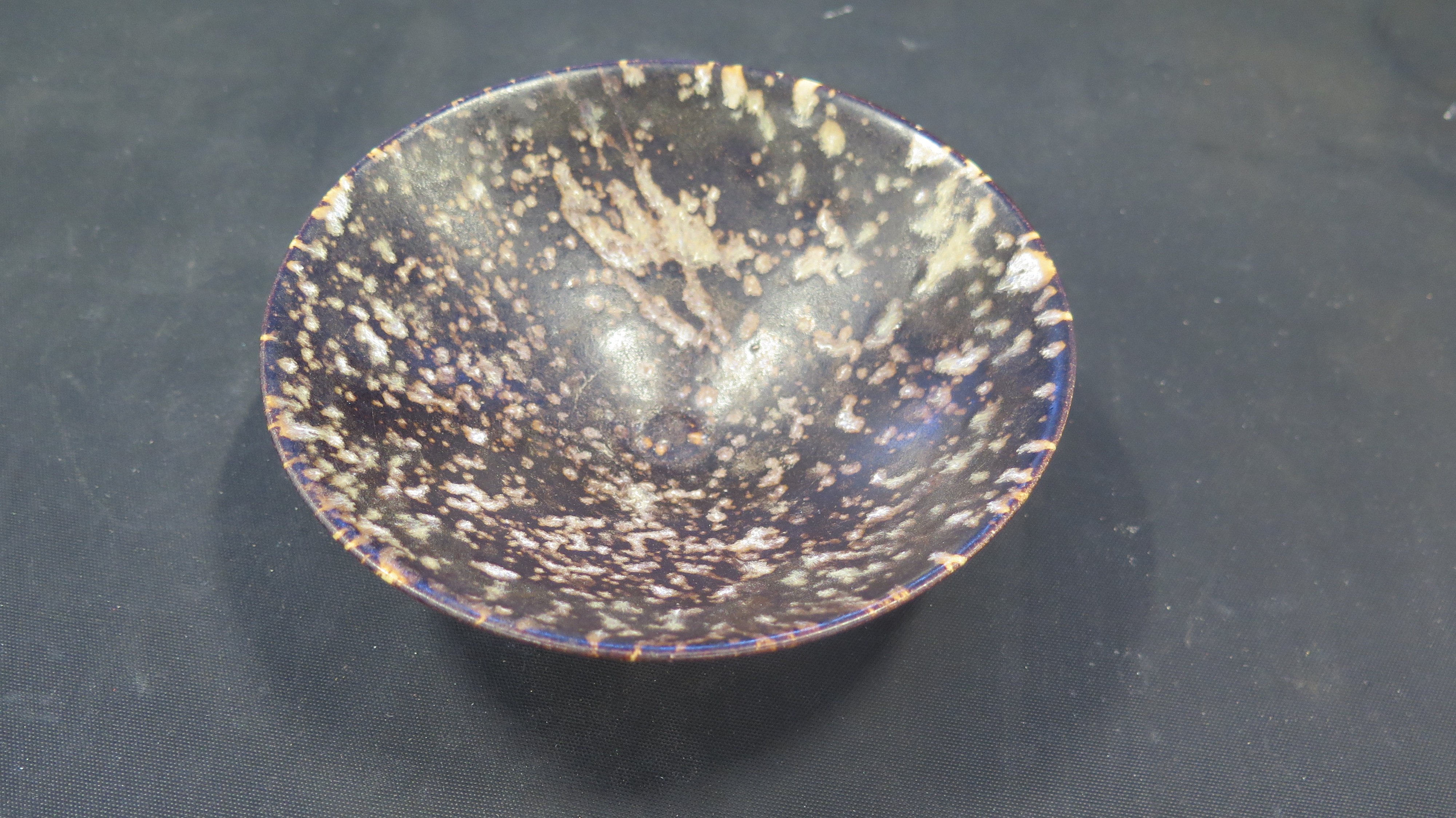
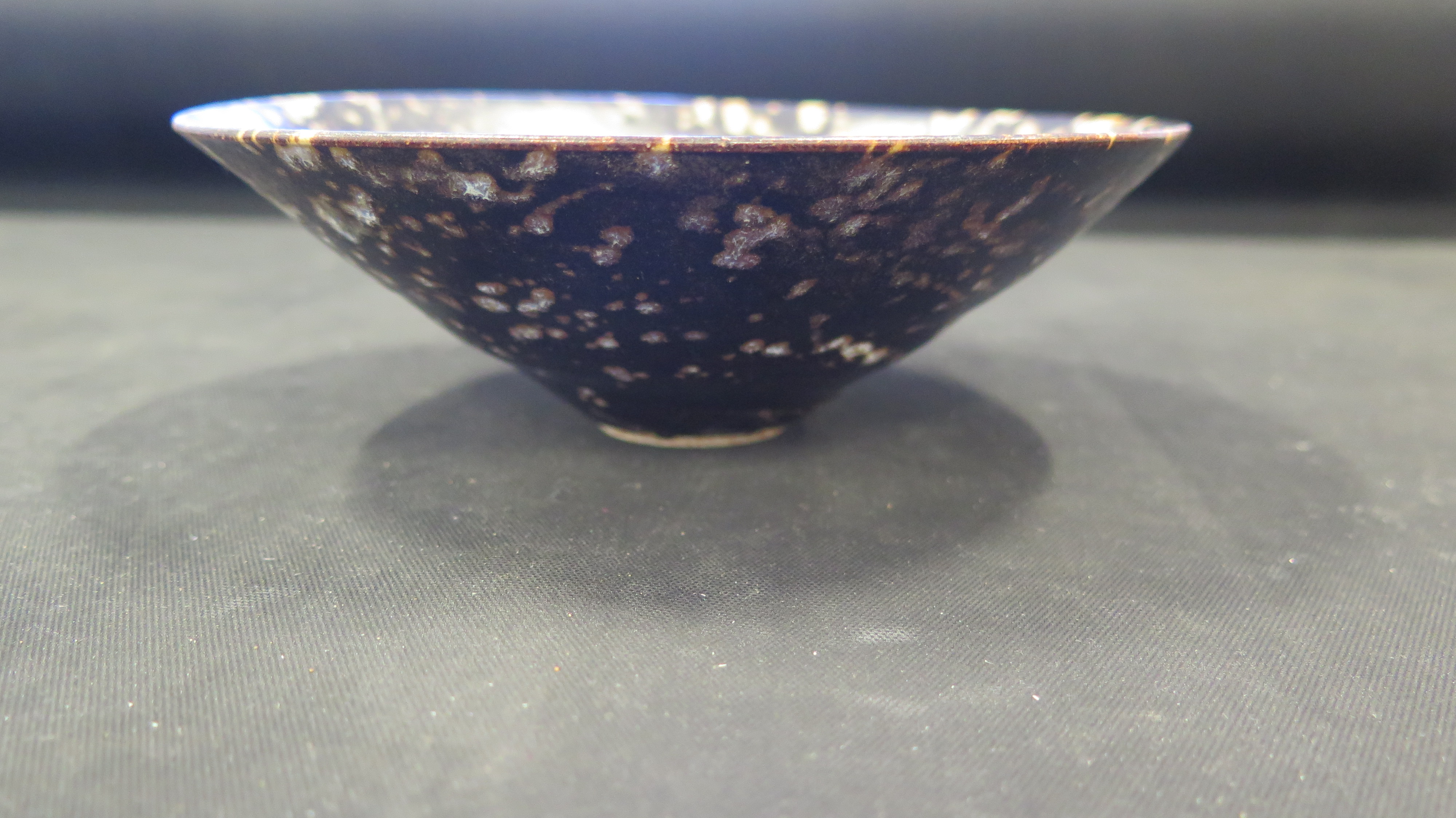
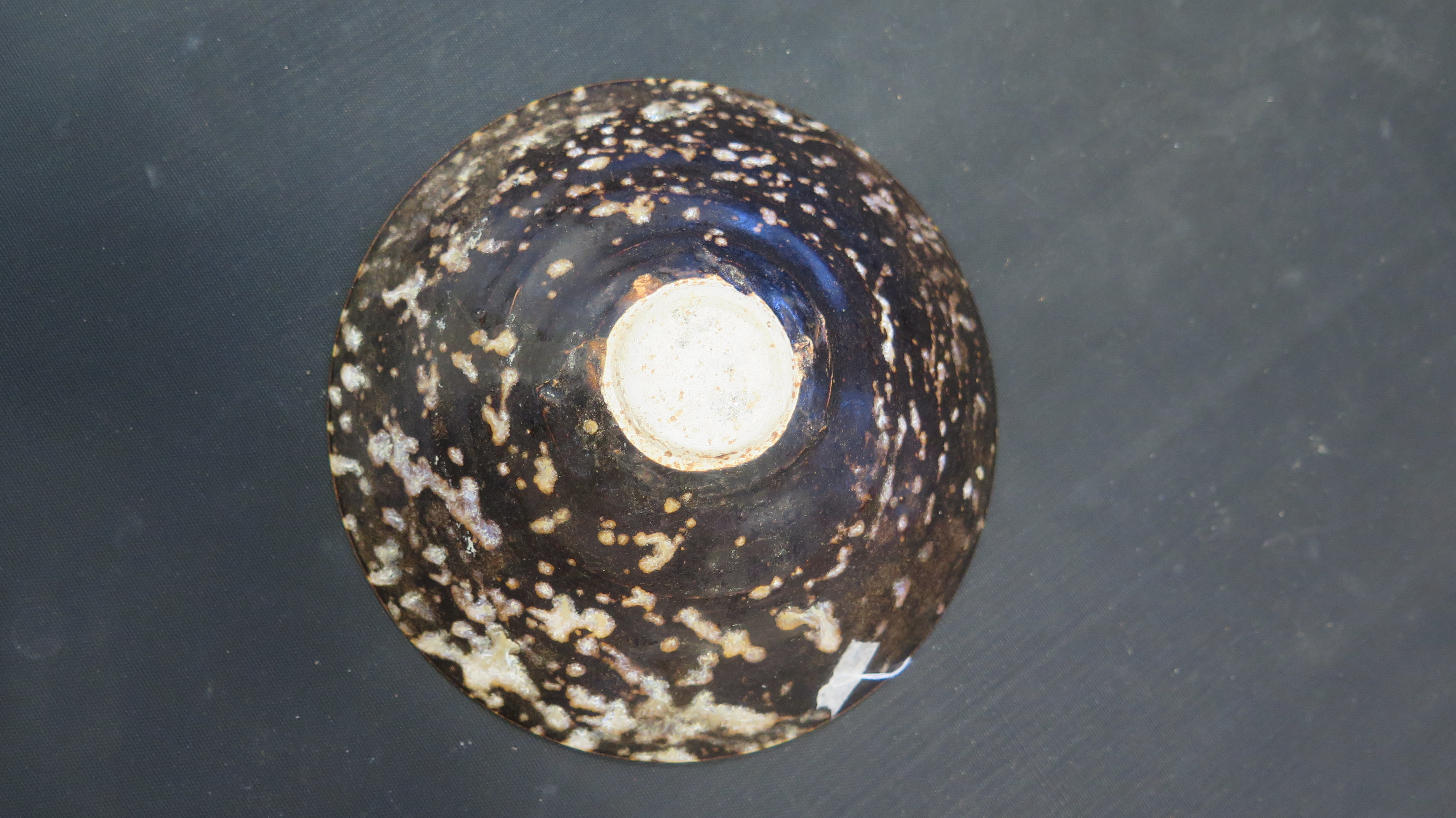
the deep rounded sides rising from a short straight foot to a slightly everted rim, covered overall in a black glaze suffused with silvery spots, stopping short of the foot to reveal a black dressed foot 10.5 cm, 4 1/8 in.
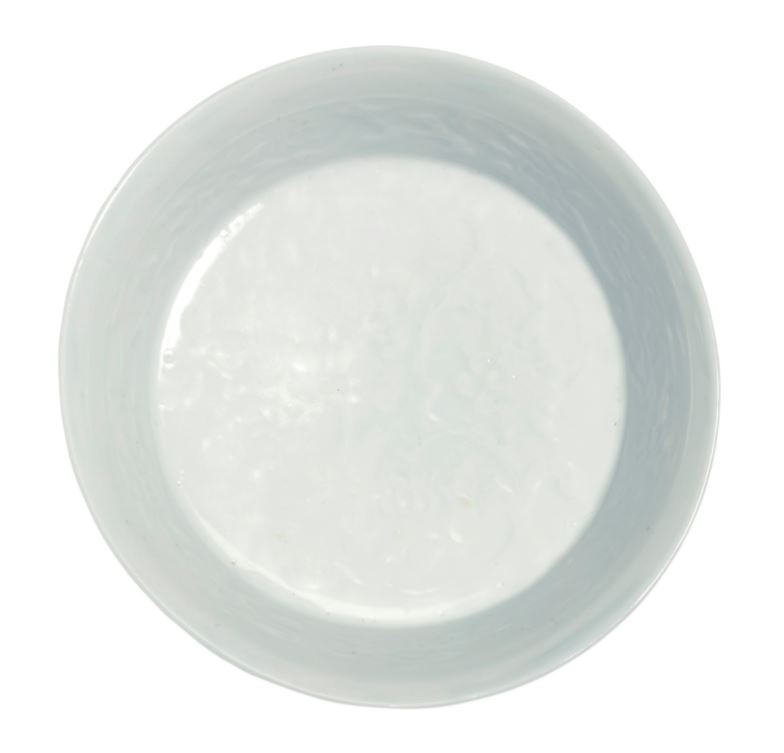
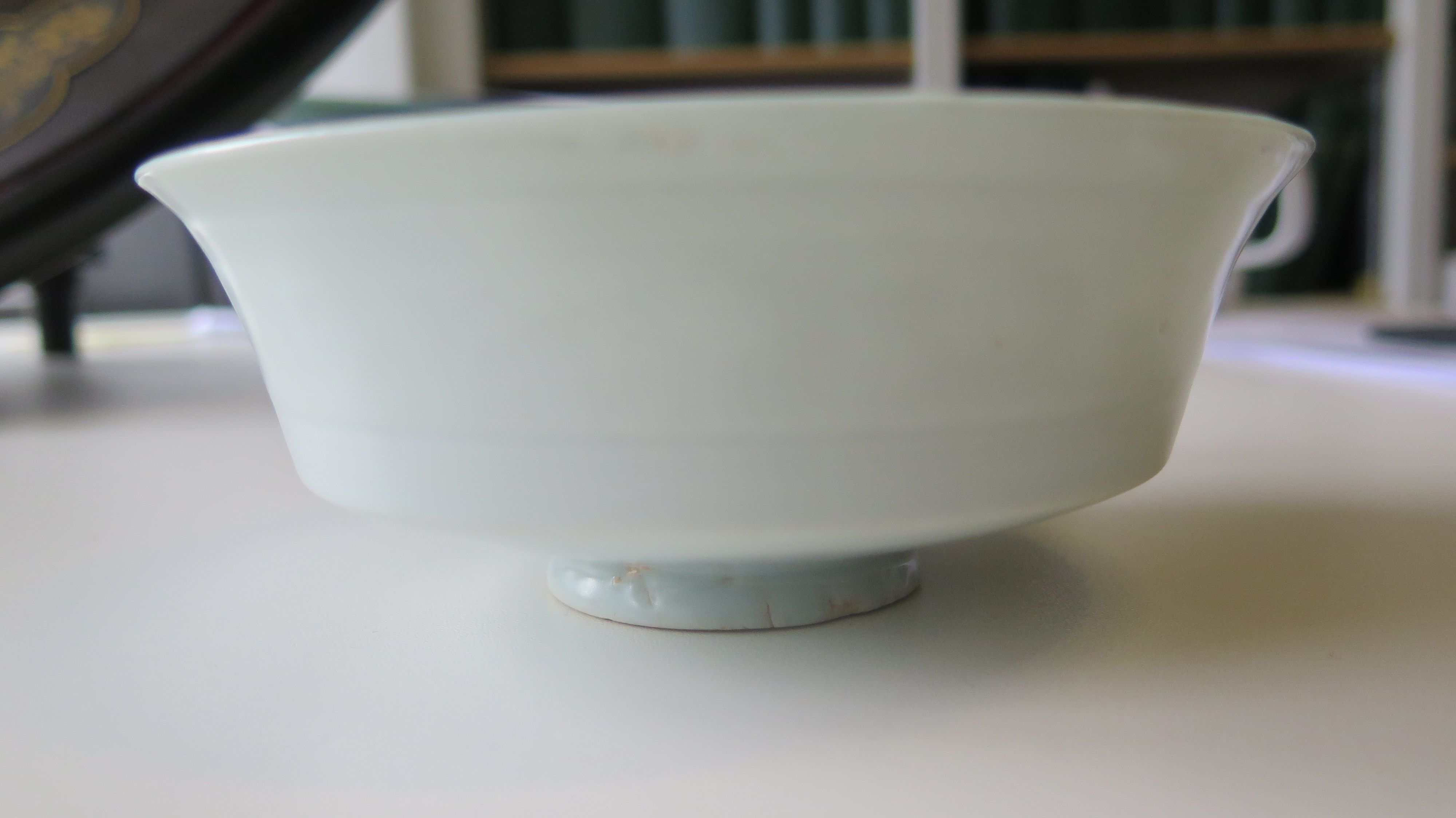
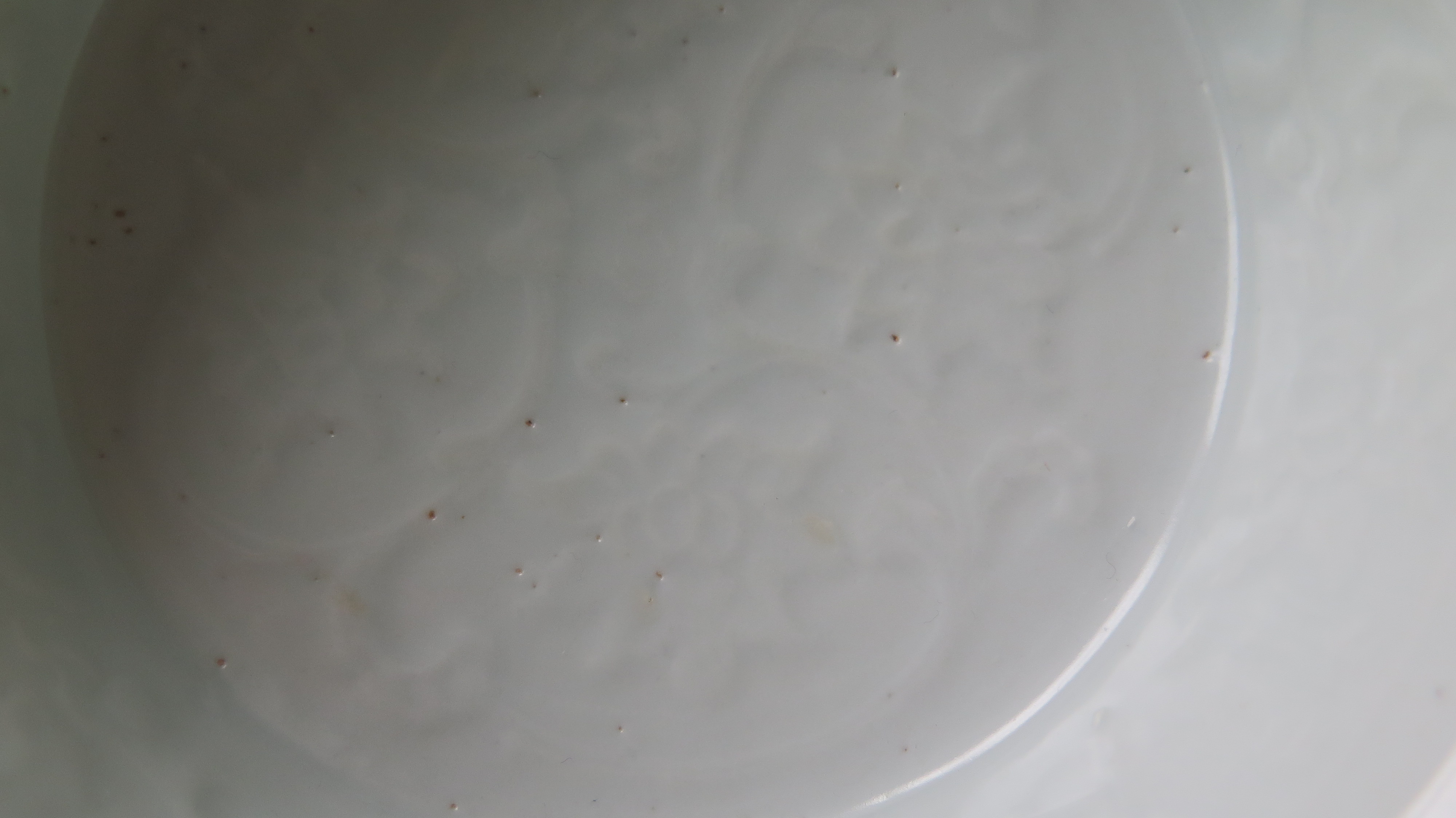
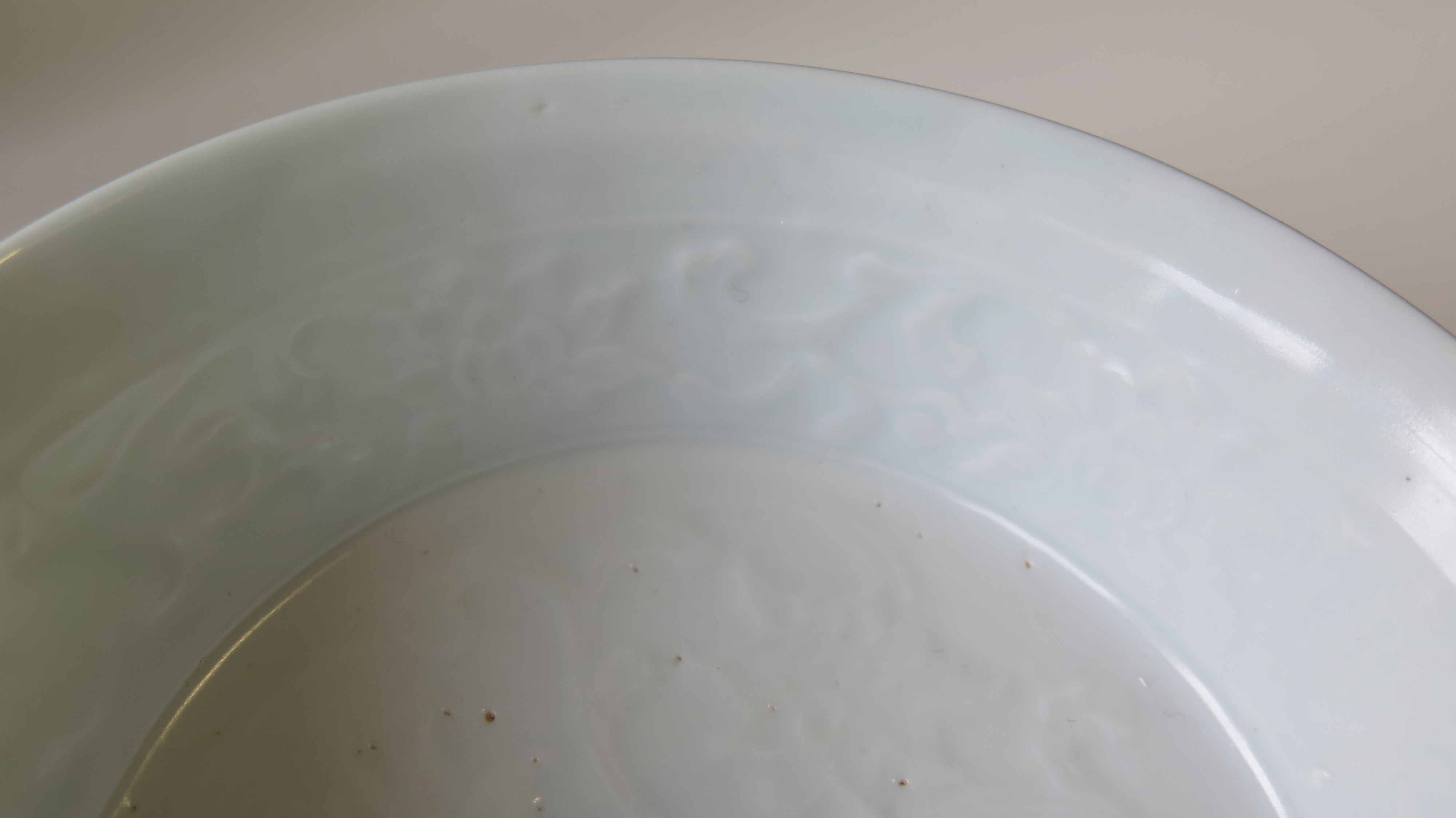
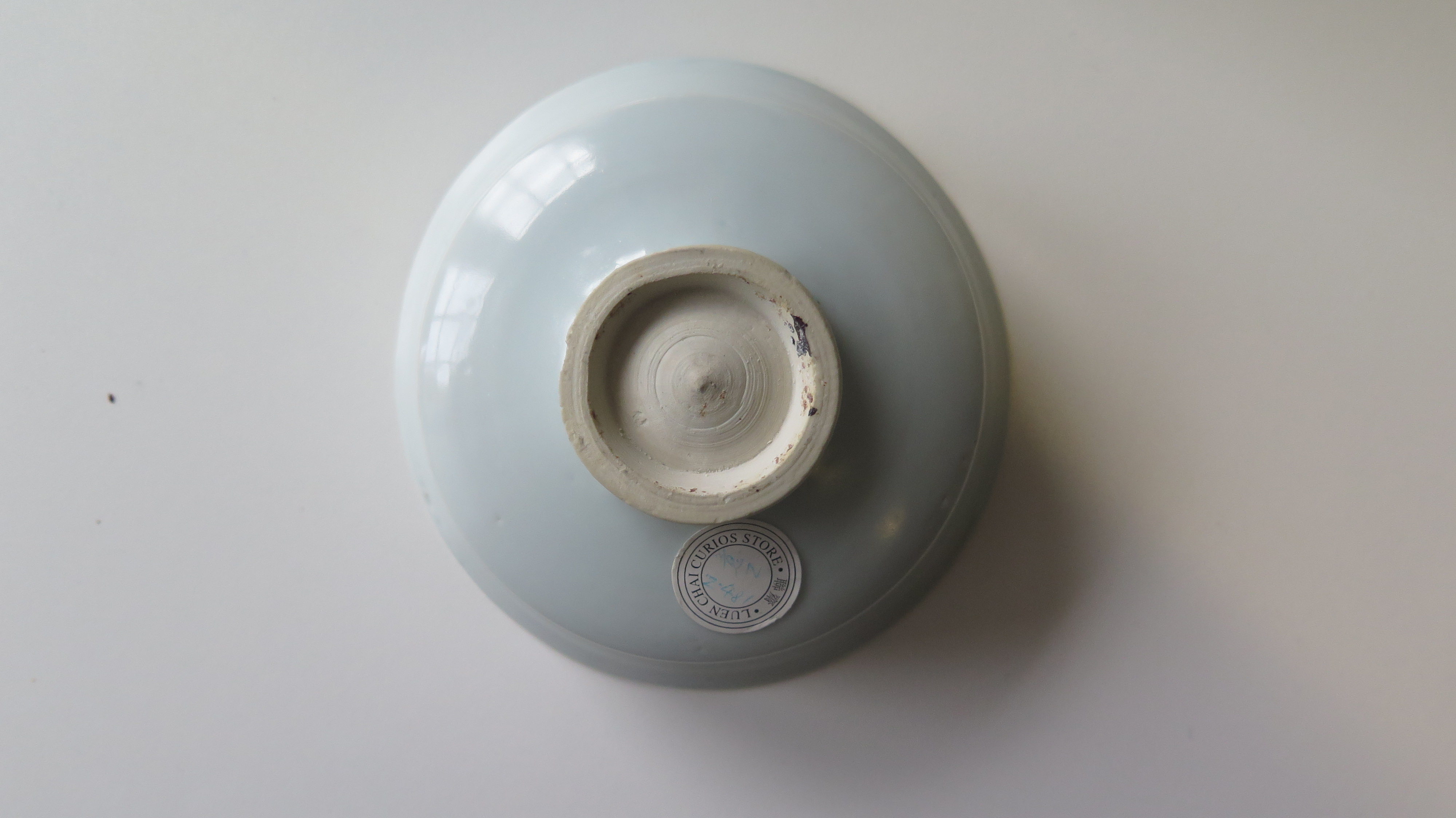
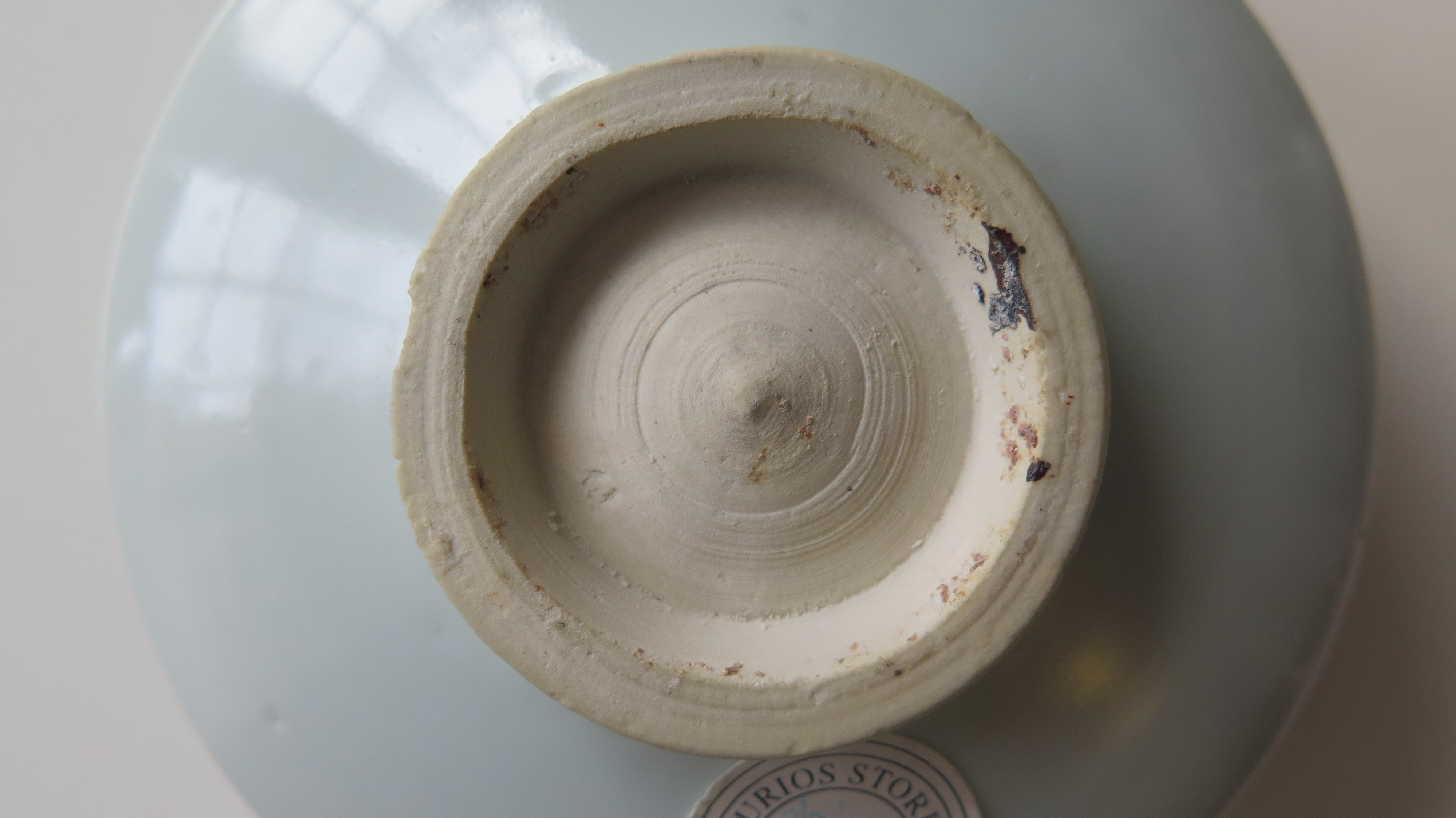
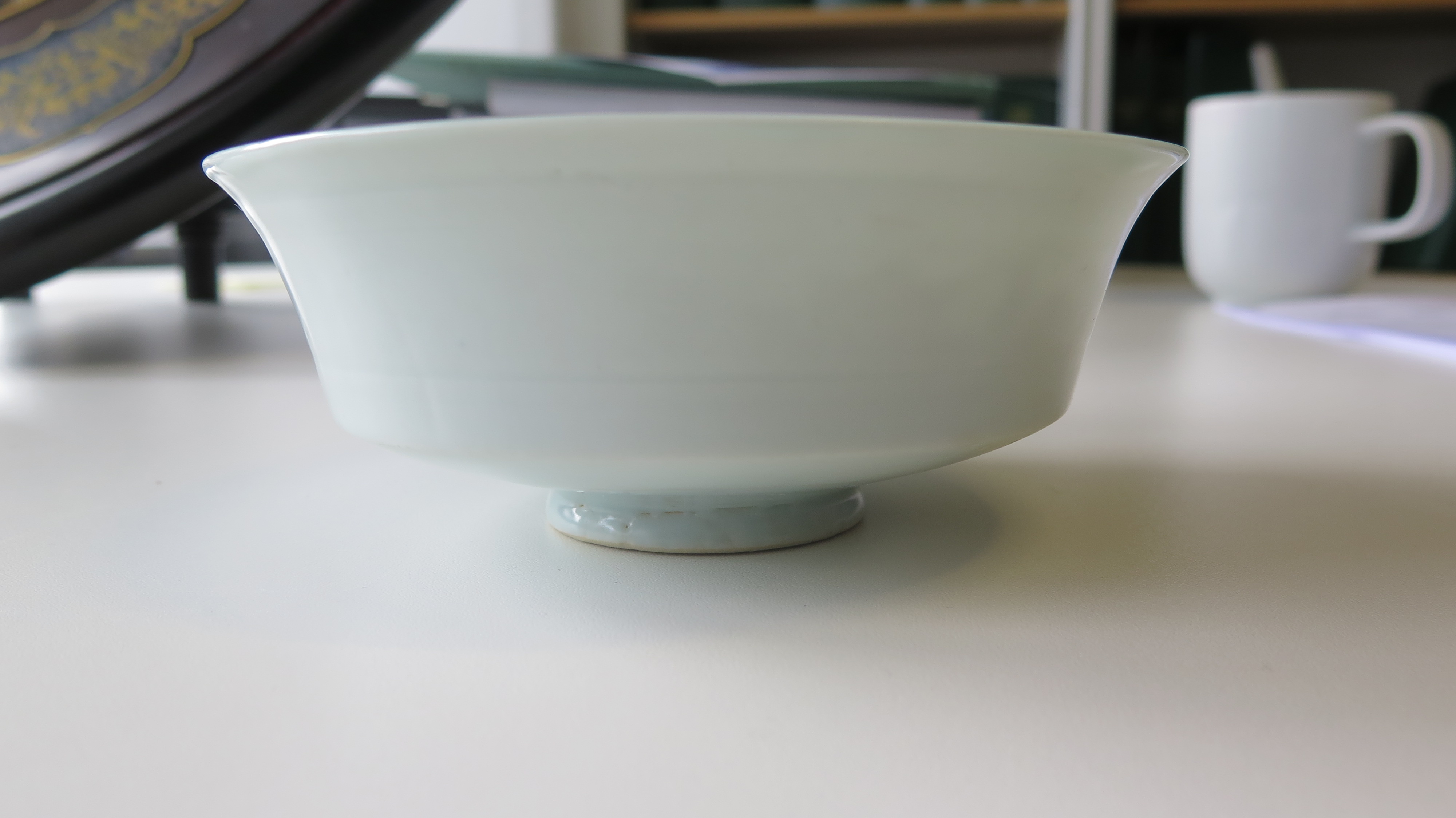
the shallow flaring sides rising from an angled base and short spreading foot to an everted rim, carved to the interior with four lotuses borne on leafy scrolls, encircled in the well by a lotus scroll band and the characters fu and lu, covered overall in a bluish-white glaze 12.5 cm, 5 in.
The bowl is in very good condition with the exception of some minor glaze firing imperfections including several burst glaze bubbles and some light glaze scratches.
As a selection of celadon ware ceramics, including this 1,000-year-old Ru tea bowl, come to auction in Hong Kong, specialist Joan Ho steers us through the evolution of the grey-green ceramic ware, from Yue to Yaozhou to Ru
What is celadon ware?
The term ‘celadon ware’, also known as green ware, refers to a type of ceramic with a soft grey-green-coloured glaze. The effect is achieved through applying an iron-rich liquefied clay ‘slip’ to the ceramic before it is fired in a kiln. During the heating process, the iron oxidises to leave a delicate and lustrous green coating.
Despite its later European name, the celadon glaze technique originated in China during the Shang (1600-1046 BC) and Zhou (1046-256 BC) dynasties, when potters began experimenting with glaze recipes.
Today, evidence of the first ‘true’ celadon ware, when production of the glazes was standardised, comes in the form of excavated shards of celadon ware from the Siqianyao kiln site in Shangyu county, Zhejiang province. These date from the time of the Eastern Han dynasty (25-220).
Yue celadon ware
After the fall of the Han dynasty, and during the subsequent Six Dynasties period (220-589), kilns producing a variation of celadon ware, known as Yue ware, were established across the Ningbo-Shaoxing plain in northeastern Zhejiang.
Yue celadon ware was typically fired above 1,300°C in order to achieve its signature grey-green colour. It was primarily produced for the imperial court, although by the 8th century it was being exported across south and east Asia, and as far as Iraq and East Africa.
Noted for its muted colour and simple, incised designs, Yue celadon ware is today considered the prototype for many later celadon wares made throughout China.
Yaozhou celadon ware
From around the 10th century, kilns along the banks of the Qishui River in Huangbao town, in Tongchuan city in northern China, began producing their own variant known as Yaozhou celadon ware. The Yaozhou kilns had initially produced black and white glazed ceramics, before switching to imitate Yue celadon-coloured glazes during the Five Dynasties period (907-960).
Yaozhou potters also adopted the decorative styles of Yue celadon ware, beginning with low relief linear designs incised or moulded into the object’s surface, which were designed to mimic brush strokes. These eventually developed into complex symmetrical patterns during the time of the Song dynasty (960-1279).
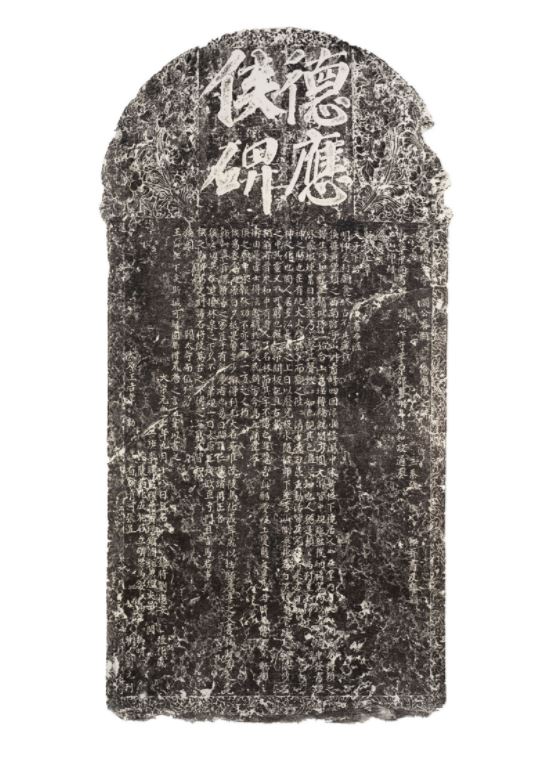
Because of these stylistic developments, the popularity of Yaozhou celadon ware quickly rivalled that being produced in the Yue kilns. Historical records, including a rubbing taken from a documentary stone stele from 1084, praise the mastery of the Yaozhou potters and describe how the tactility and olive-green colour of their celadon glazes made them look like jade.
Longquan celadon ware, another successor to Yue celadon ware, also emerged around the 10th century, from a village named Dayao in southern China.
Initially, during the Northern Song dynasty (960-1127), Longquan ware was covered in celadon glazes ranging in colour from faint yellowish-green to a dark olive tone, before evolving to adopt pastel and sea-green shades by the time of the Southern Song dynasty (1127-1279).
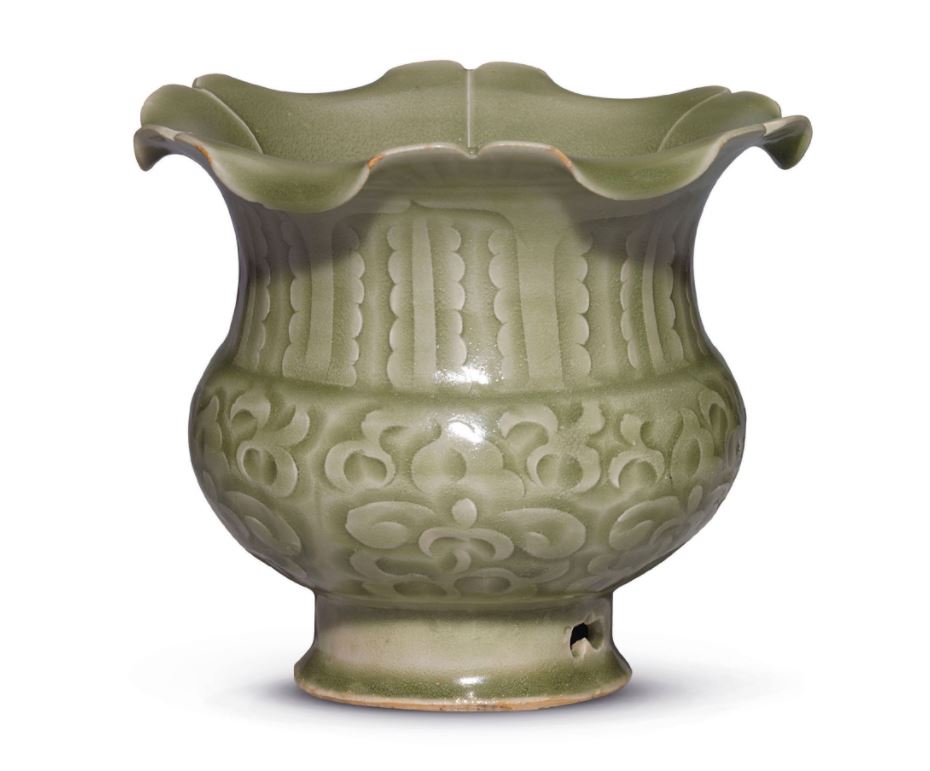
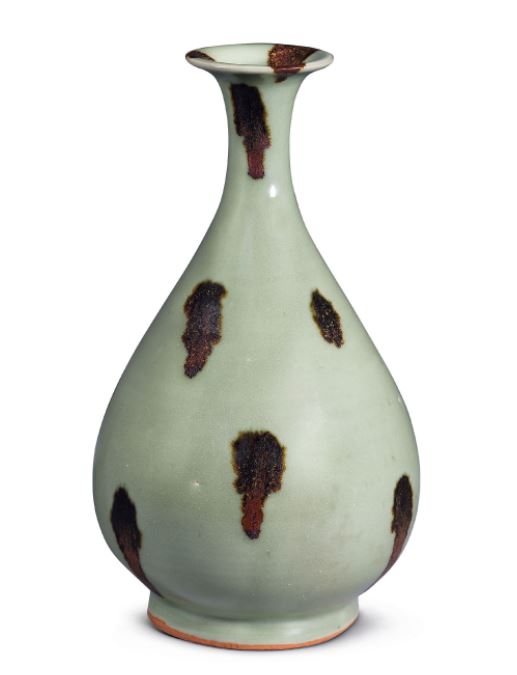
After taking initial cues from both Yue and Yaozhou celadon ware, Longquan celadon ware eventually developed its own decorative style, combining elements of impressed designs, spotted splashes and intricate moulded appliqués.
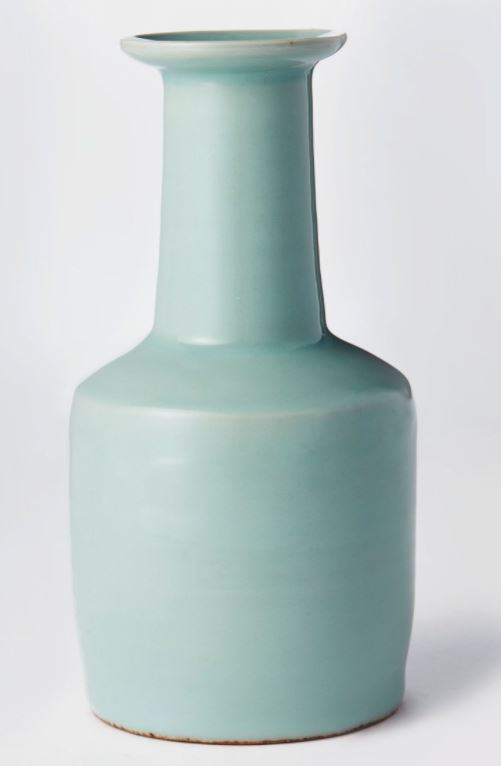
The Longquan celadon mallet-shaped kinuta vase shown above is from the Southern Song dynasty (1127-1279), and is being sold at Christie’s in Hong Kong on 26 November. Its particularly rare, long-necked shape was highly prized by Japanese tea masters for its beauty. This example was passed through generations of the Hachisuka family, one of Japan’s most successful and longstanding feudal clans of Edo period Japan.
The exquisite craftsmanship of Longquan celadon ware remained prized for centuries. Archaeological evidence from the Fengdongyan kiln at Dayao revealed that it produced celadon ware for the imperial courts of emperors Hongwu (r. 1368-1398) and Yongle (r. 1403-1425) during the Ming dynasty (1368-1644).
Ru ware
For a brief period around the year 1100, a particularly rare style of celadon ware known as Ru ware was produced in the Ru kiln in the village of Qingliang Temple, Baofeng county, Henan province.
Noted for its distinct bluey-green-coloured glaze, and for being mostly free from any decoration, Ru ware was reserved for the imperial court. It has been suggested that it was accepted as a form of tax on the local kiln — the court would keep prime examples for the emperor while distributing the rest to officials, temples and foreign dignitaries.
The production of Ru ware was brought to an abrupt end around 1127 when the area containing the kilns was invaded by the neighbouring Jin dynasty armies. As a result, fewer than 100 pieces survive intact today, making it some of the most coveted celadon ware among collectors and museums.
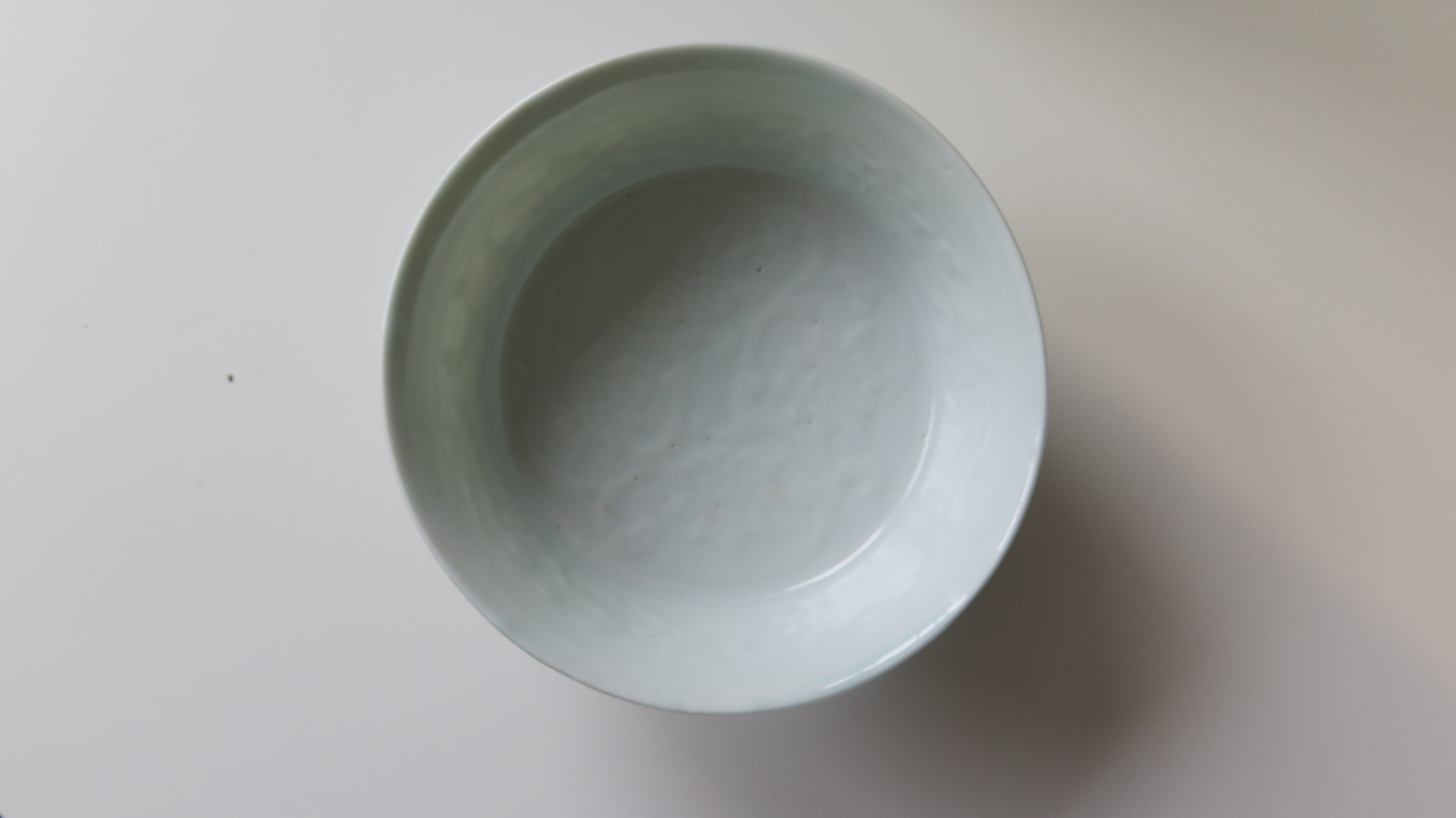
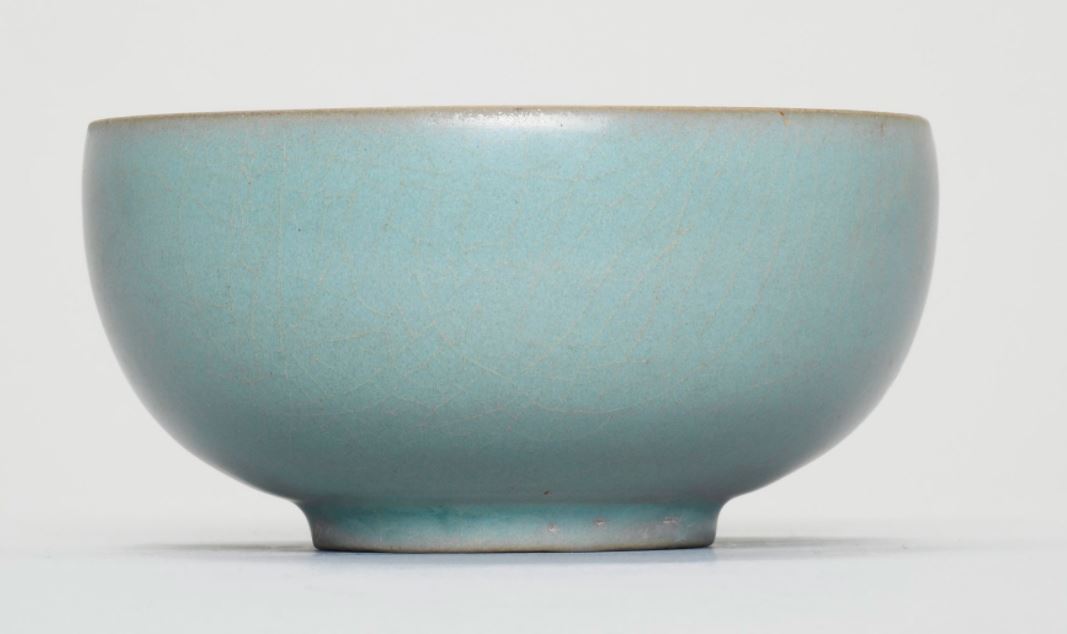
On the 26 November, in the Beyond Compare: A Thousand Years of the Literati Aesthetic auction, Christie’s is selling a newly discovered Ru ‘sky-blue’ tea bowl from the Northern Song dynasty (above). Unlike the majority of Ru ware, which was unearthed in archaeological excavations, this example has been passed down through generations of owners, and exhibits a striking and unusual blue colour and lustrous glaze that make it unique.
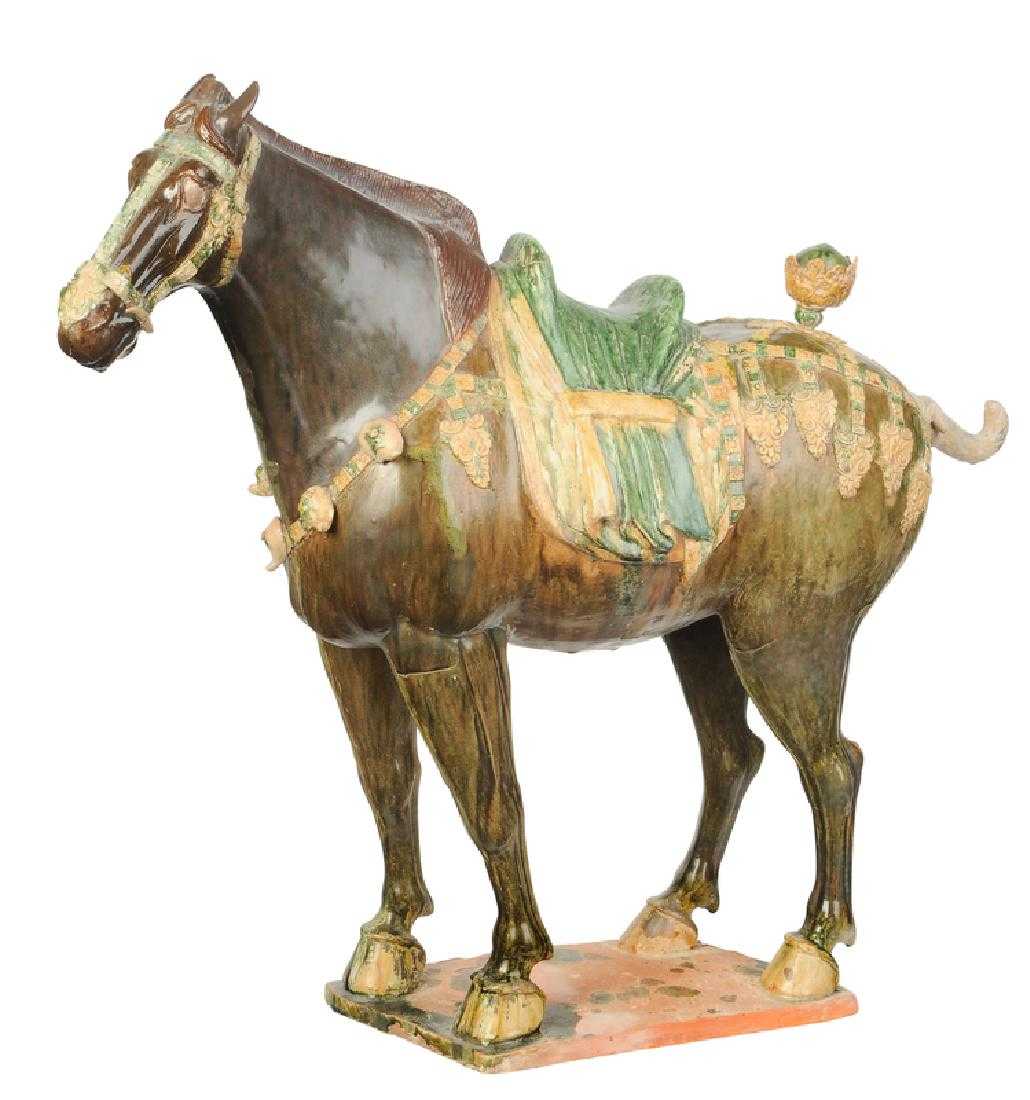
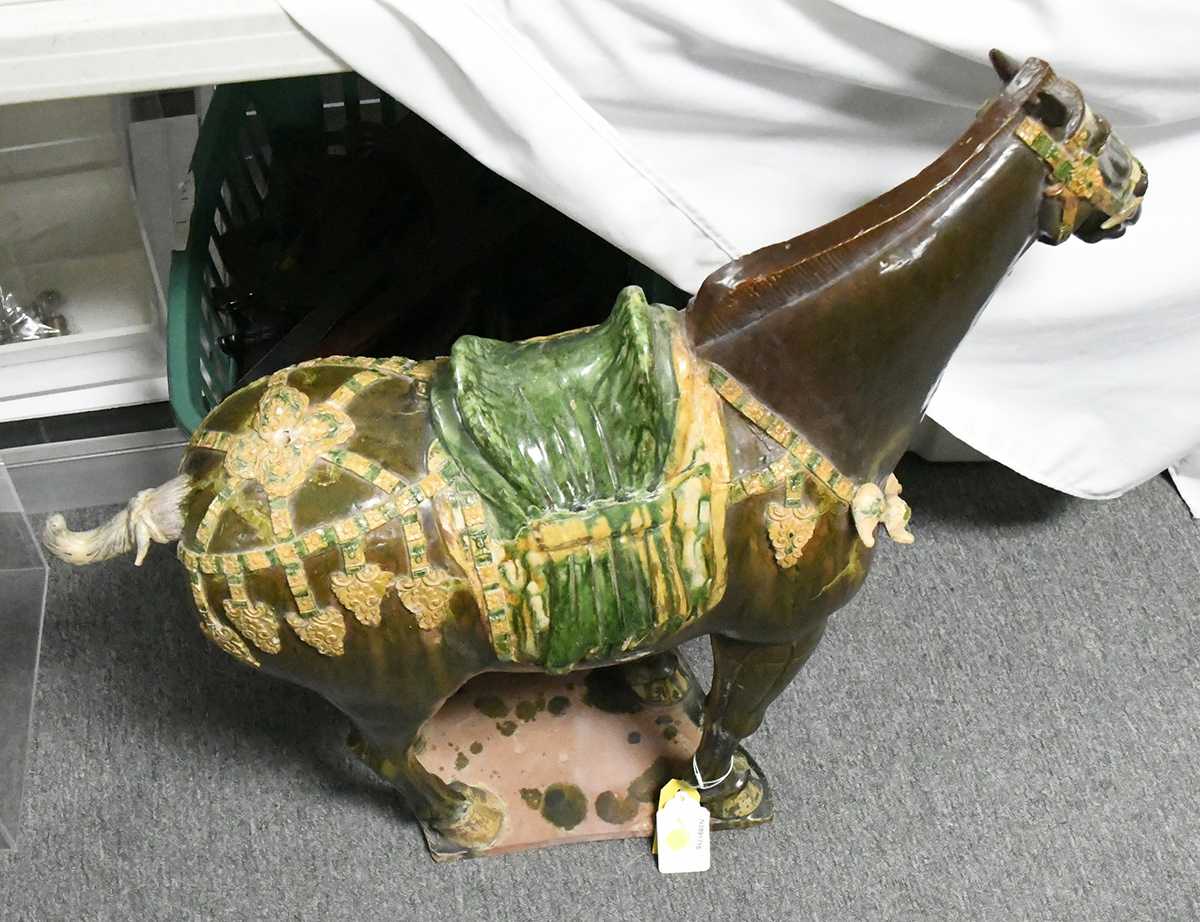
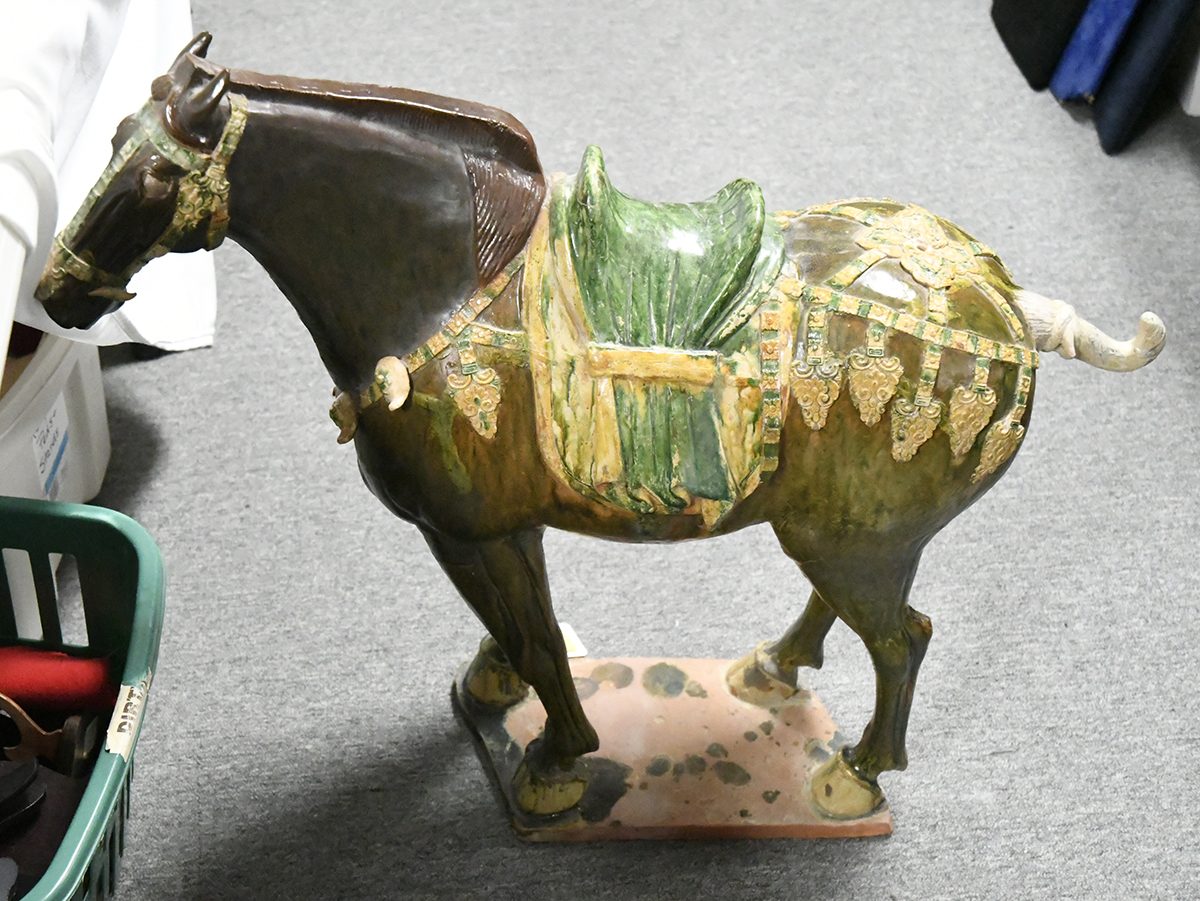
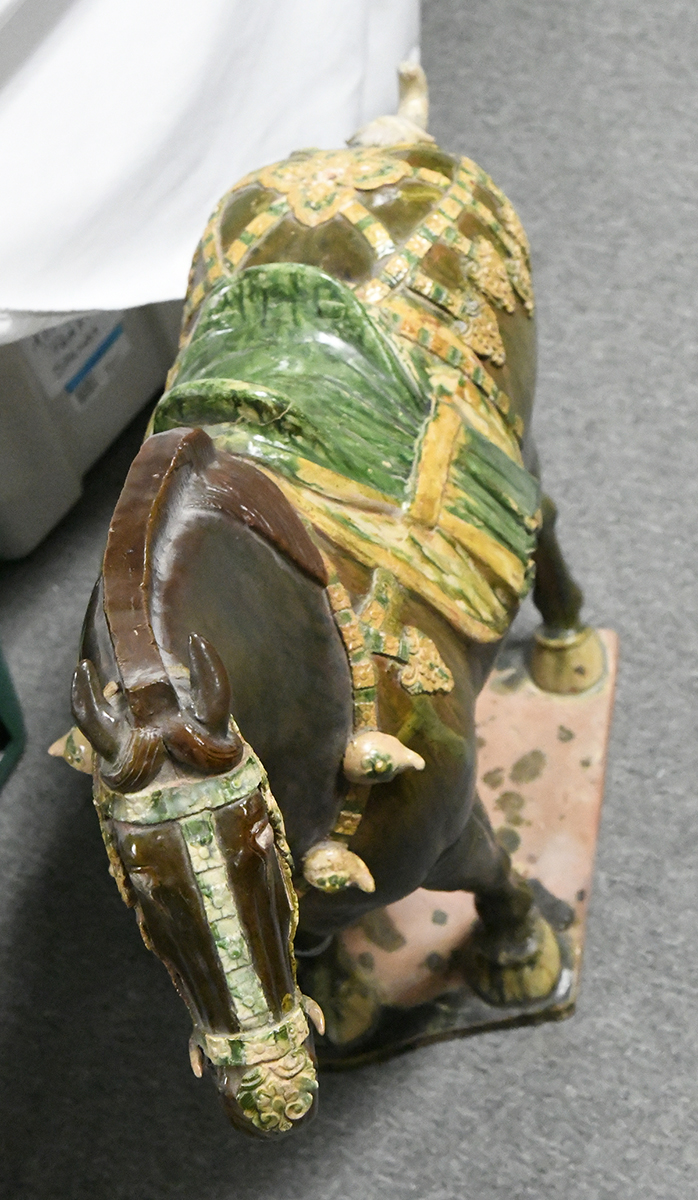
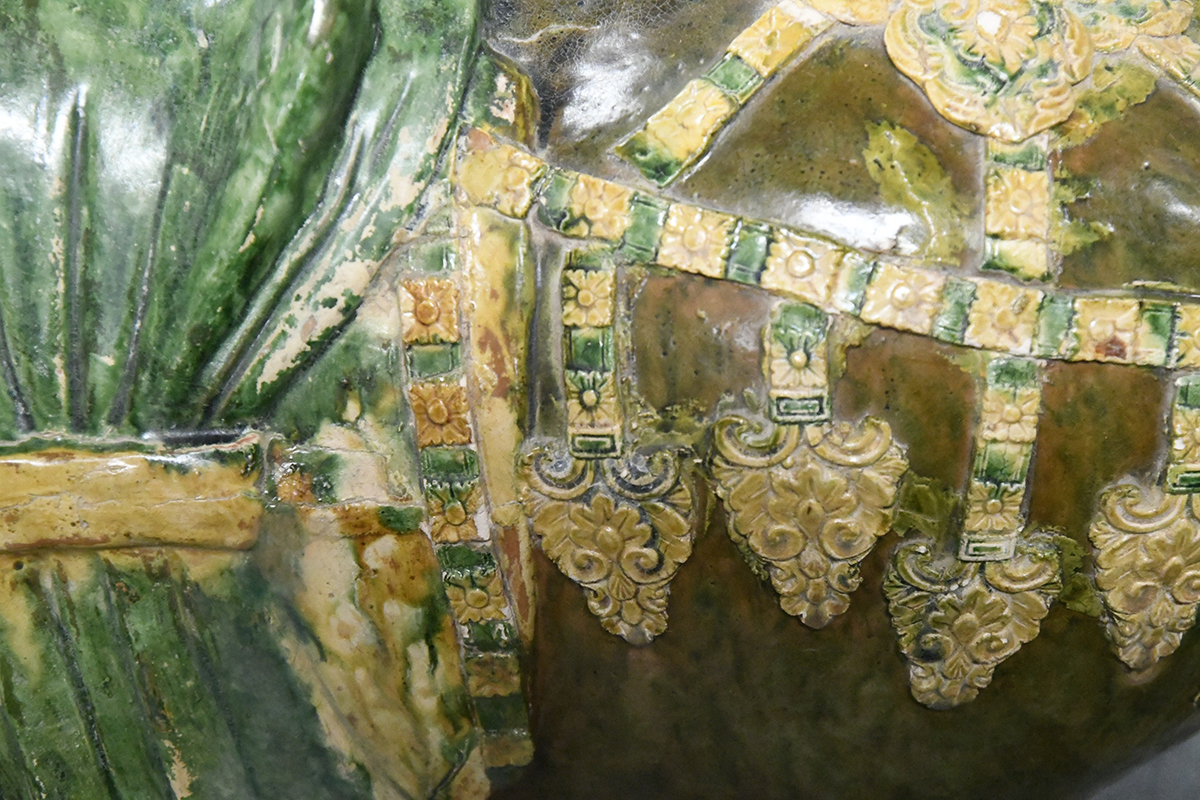
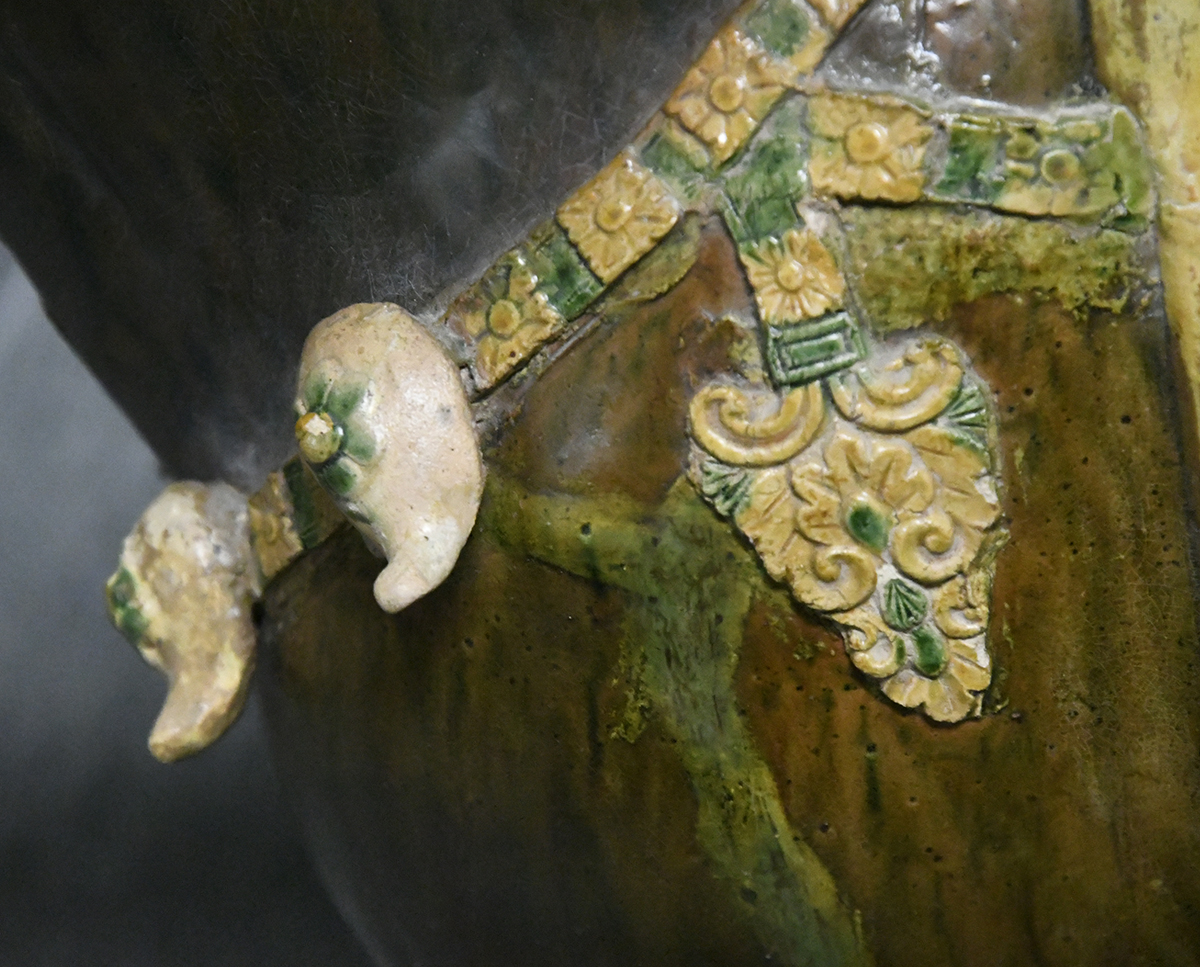
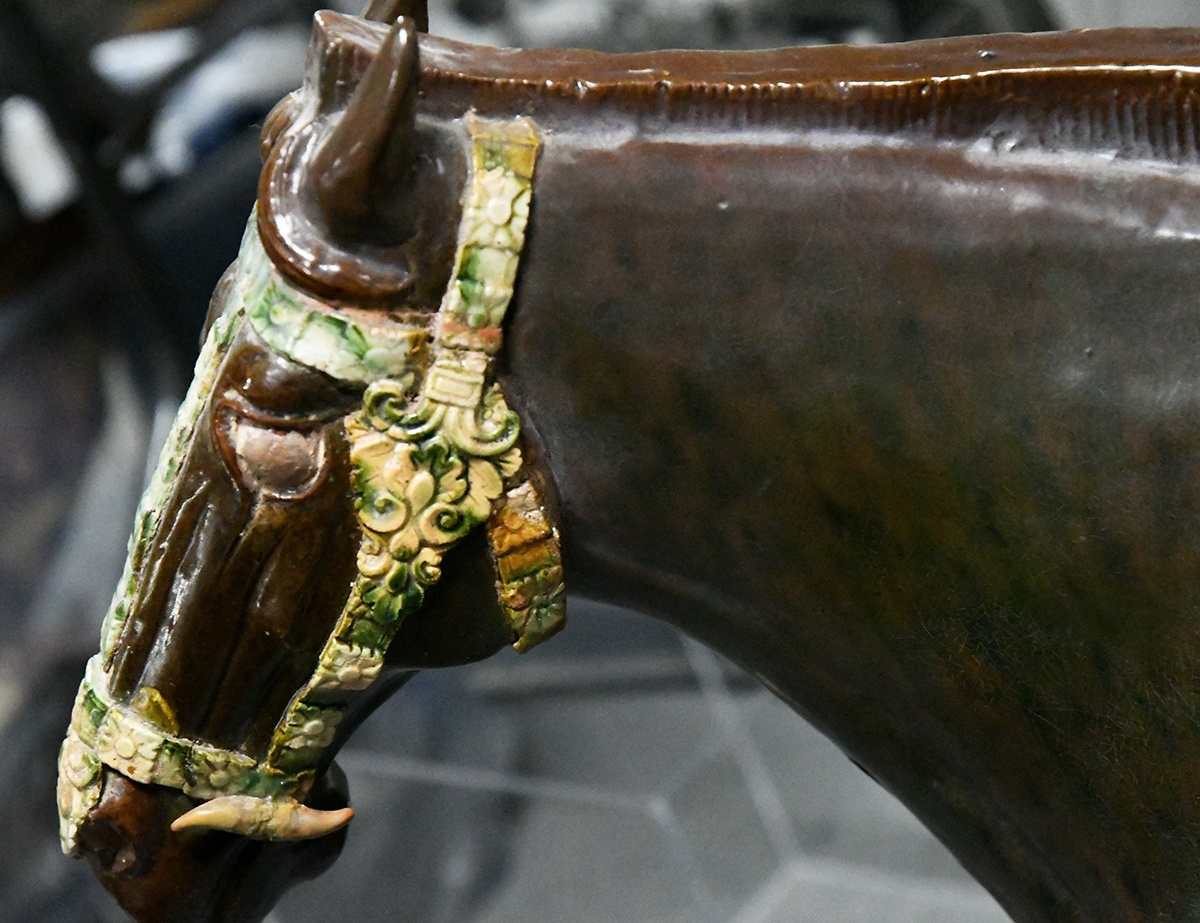
Chinese, caparisoned horse standing foursquare on molded base, with head slightly turned to the left, upturned bobbed tail, bright green and yellow saddle, yellow bridle and ornament decorated with apricot leaves and removable pommel on horse’s hind quarters, 28 x 32 x 10 in.; with original receipt from Vallin Galleries, Wilton, CT, dated 2007, which reads “Chinese Sancai Glazed Saddled Horse Standing Foursquare, Tang Dynasty (618-906 AD)” indicating a price of $50,000
CONDITION
with some repairs to saddle, some touch up paint, minor chips to edges consistent with age and use, firing anomalies as made, please see black light photographs
类似拍品:佳士得描述
A RARE MASSIVE SANCAI-GLAZED POTTERY FIGURE OF A HORSE TANG DYNASTY (618-907)
Well modeled standing foursquare on an arched base with the head turned slightly to the left, the head well detailed with expressive eyes and slightly flared nostrils set below a split forelock and pricked ears, the curve of the muscular neck emphasized by the hogged mane, the saddle covered with an amber-glazed cloth, with florets decorating the harness and the trappings which are hung with tassels, all glazed in amber, green, and cream tones 37 in. (94 cm.) high
This magnificent, and impressively large horse with its cream-colored coat and amber mane and tail, is unusual in its attractive coloring and the details of its trappings. The ceramic horses of the Tang dynasty were either decorated with sancai (three-color) glazes, like the current horse, or were unglazed and painted. Both techniques were extremely successful. The sancai-glazed group exhibits brilliant, lasting colors which emphasized the horses’ powerful bodies.
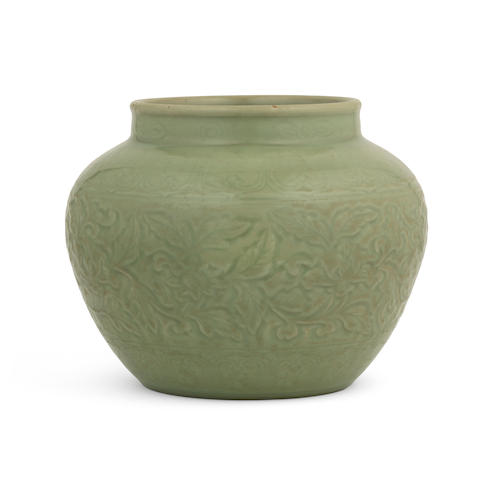
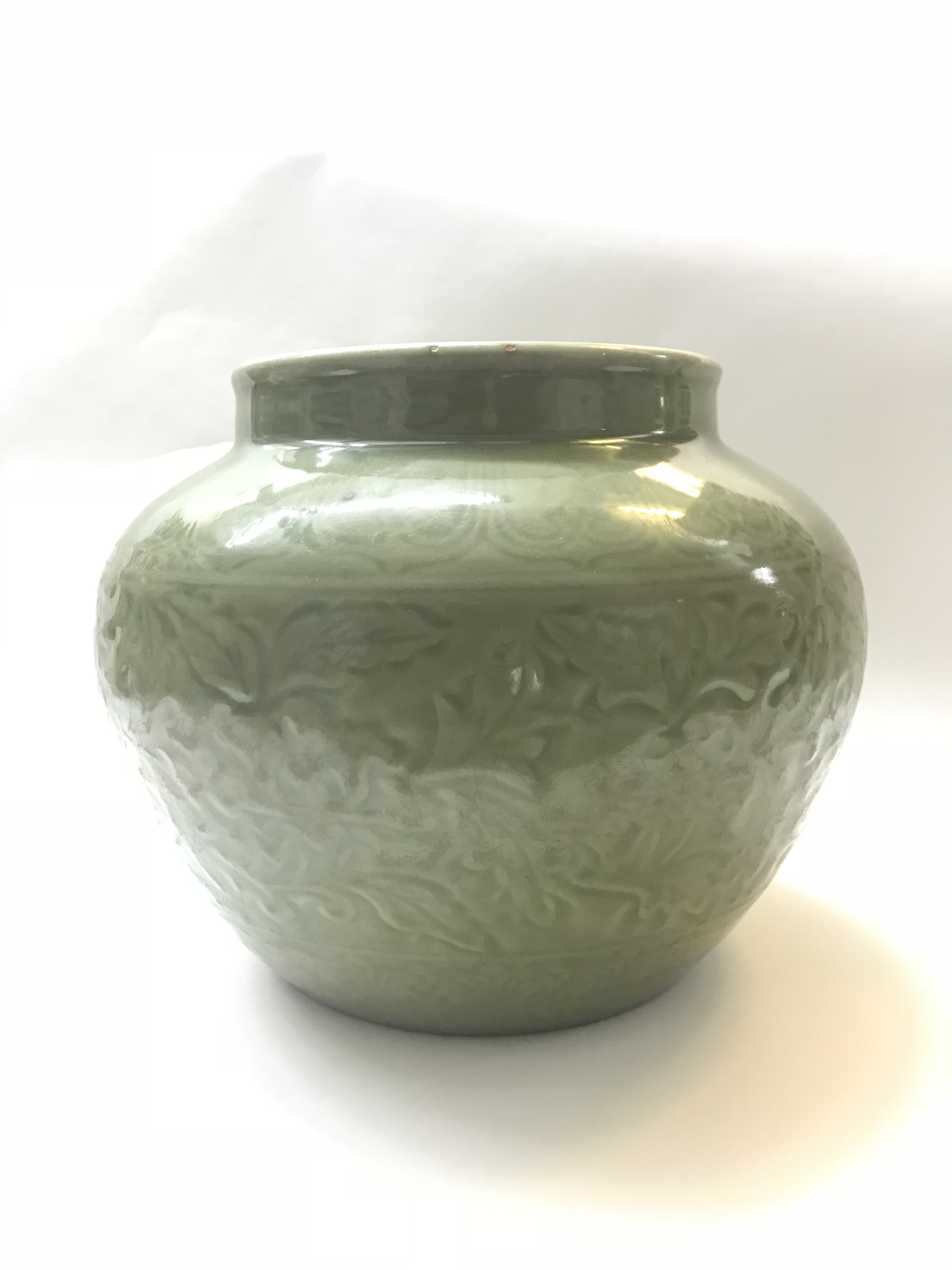
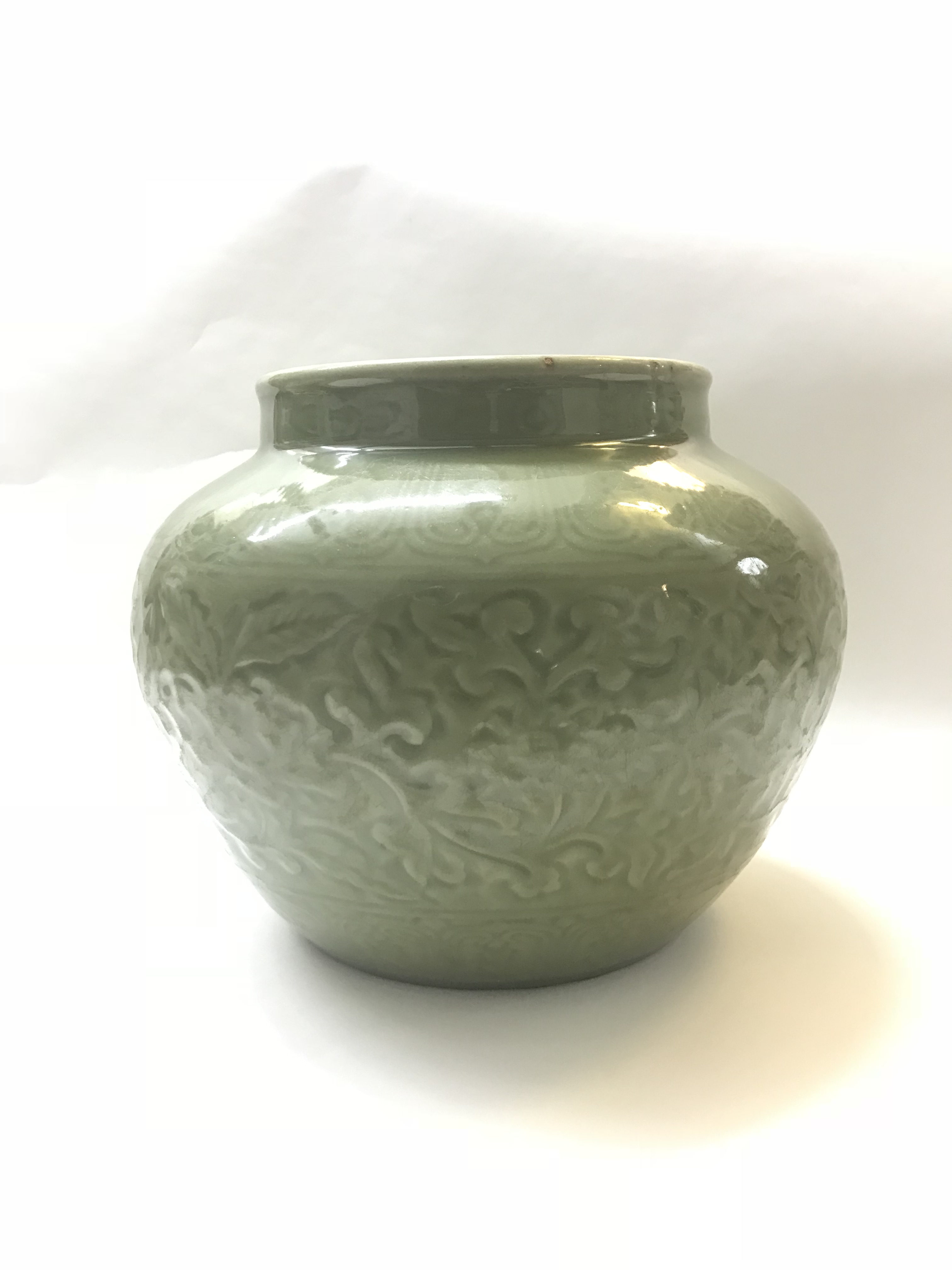
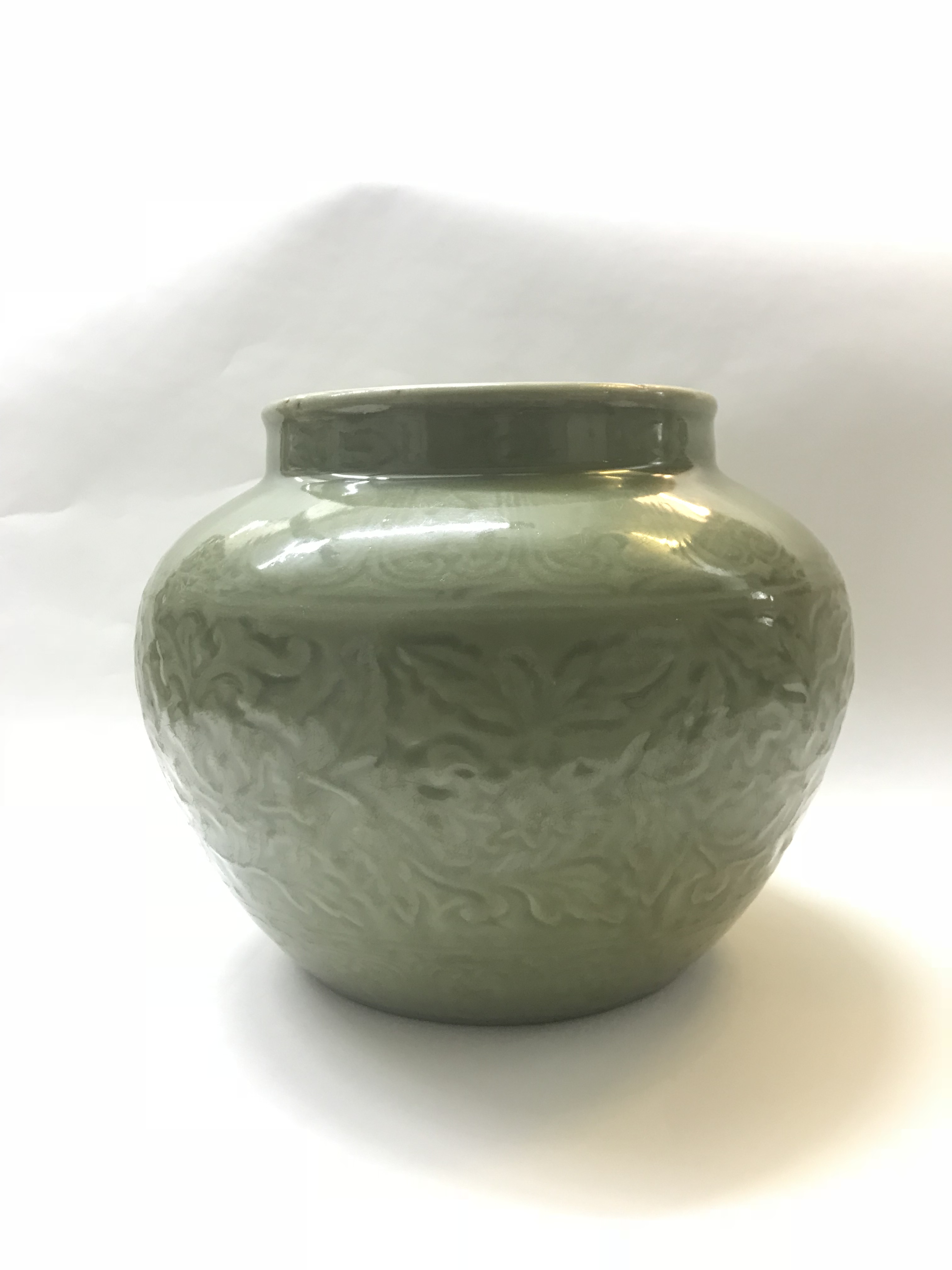
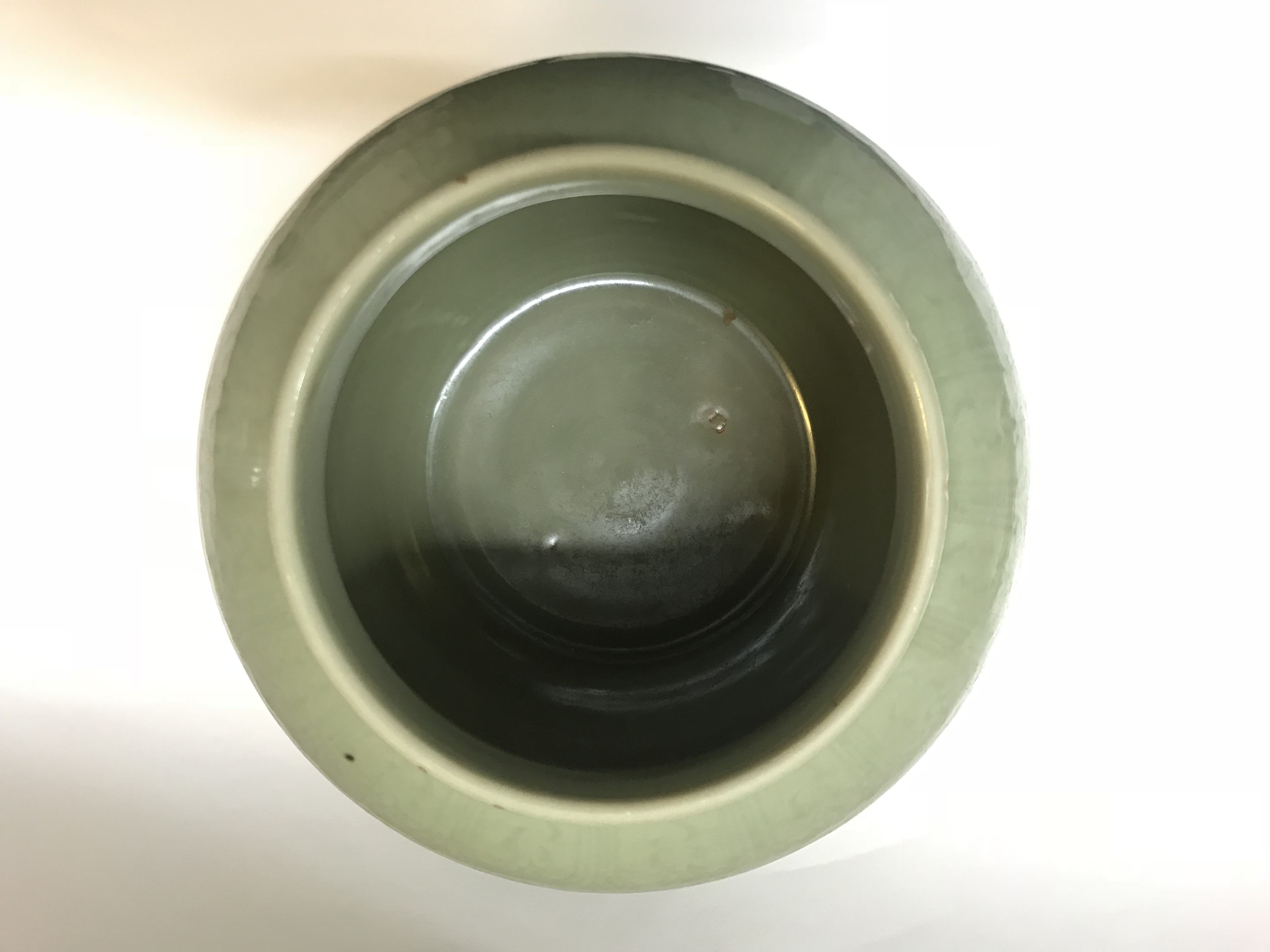
A LONGQUAN CELADON-GLAZED MOULDED JAR Early Ming Dynasty
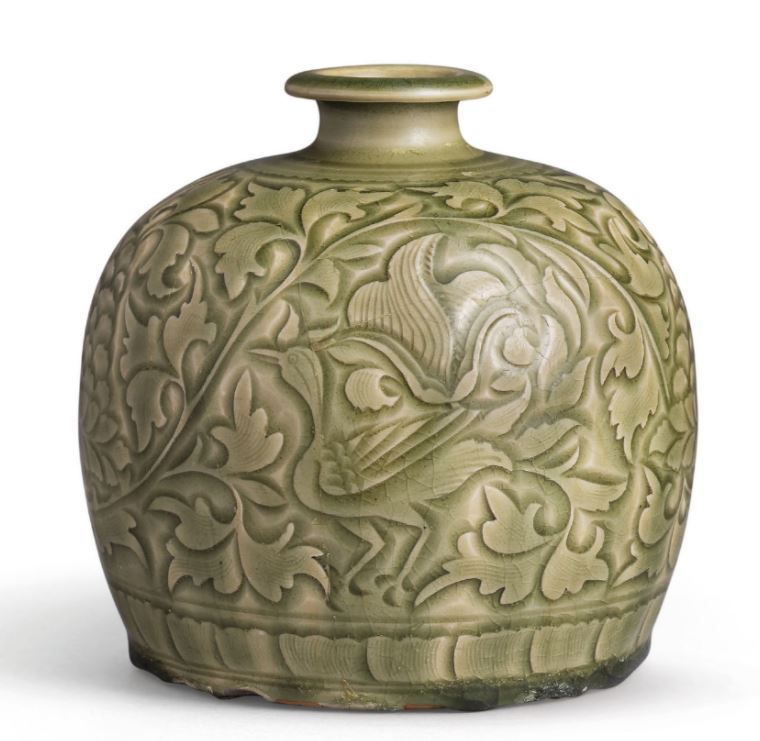
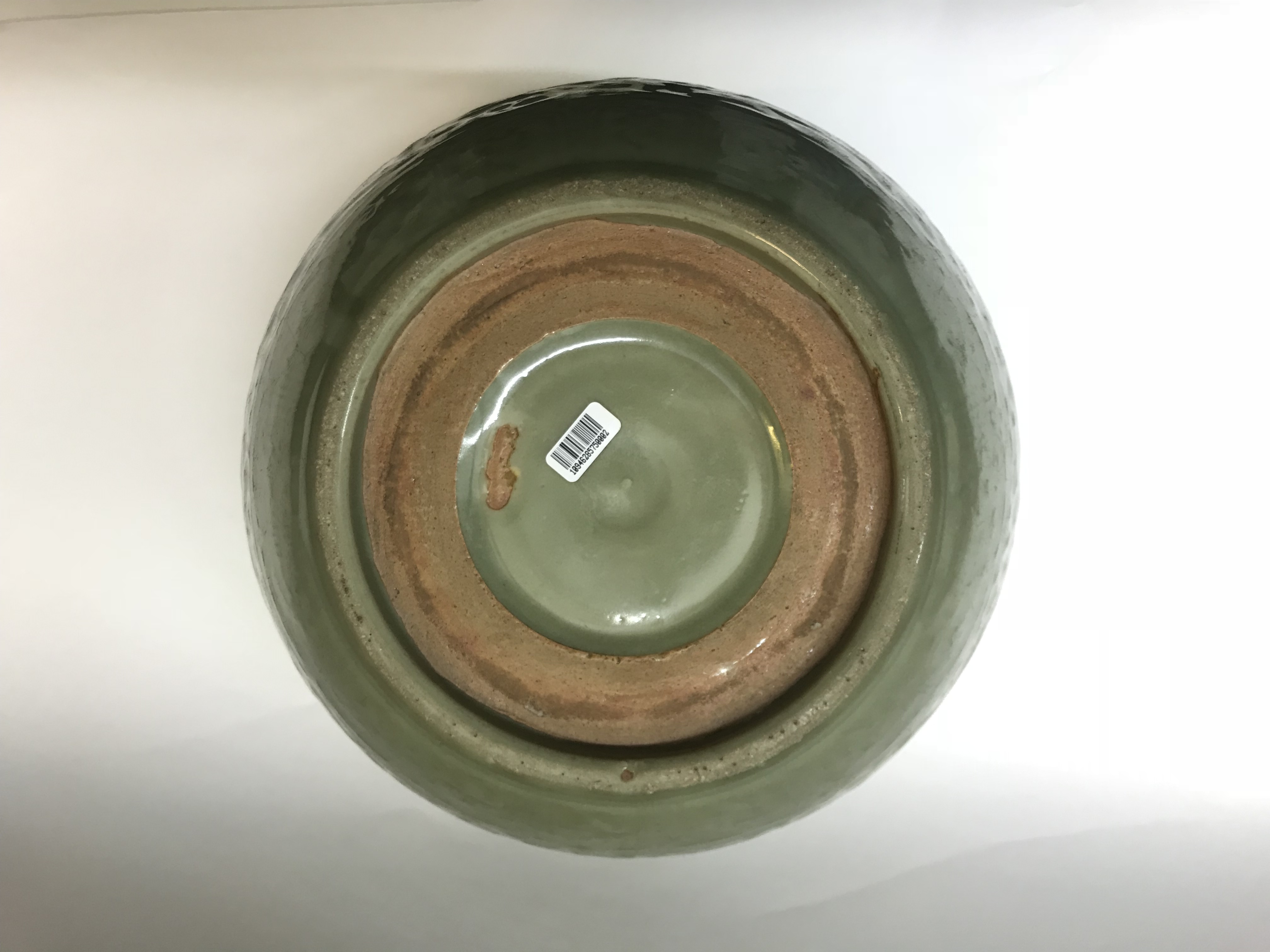
A Longquan celadon-glazed moulded jarEarly Ming Dynasty Heavily potted, the slightly compressed globular body rising to a straight neck and lipped rim, densely moulded around the exterior with peony and chrysanthemum flowers borne on scrolling foliage, between continuous bands of lappets to the shoulder and the foot. 19.8cm (7 3/4in) high.
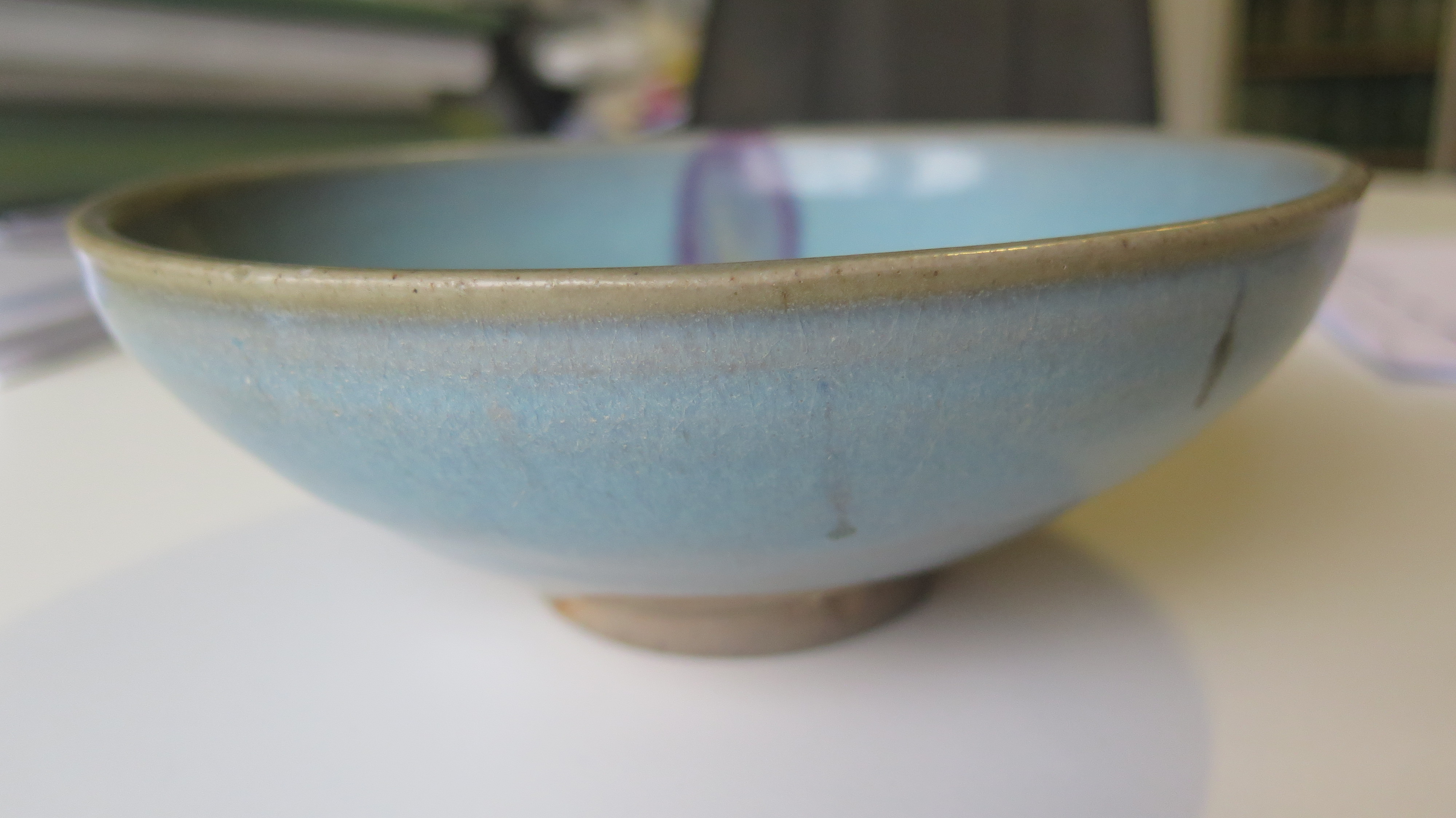
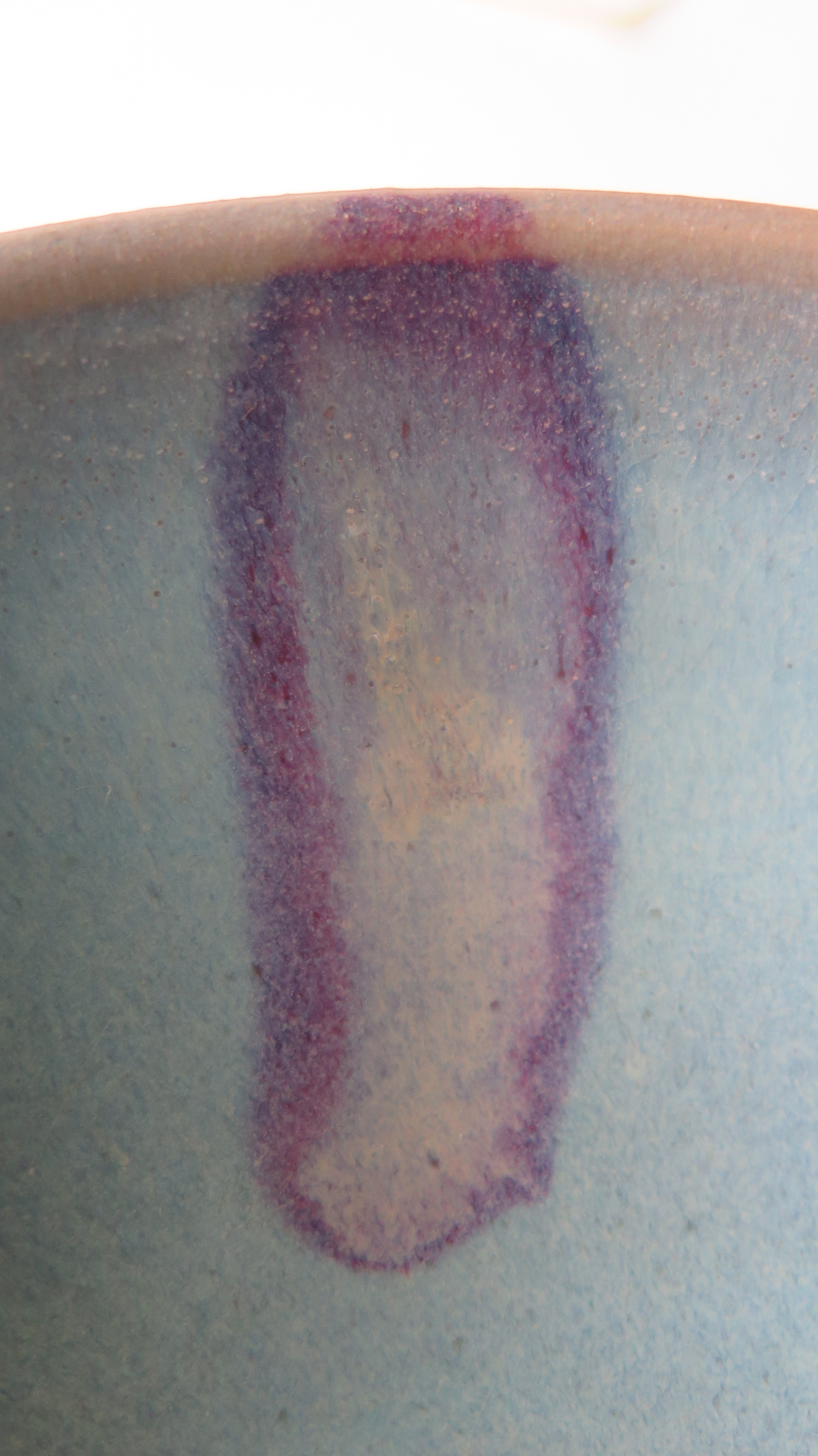
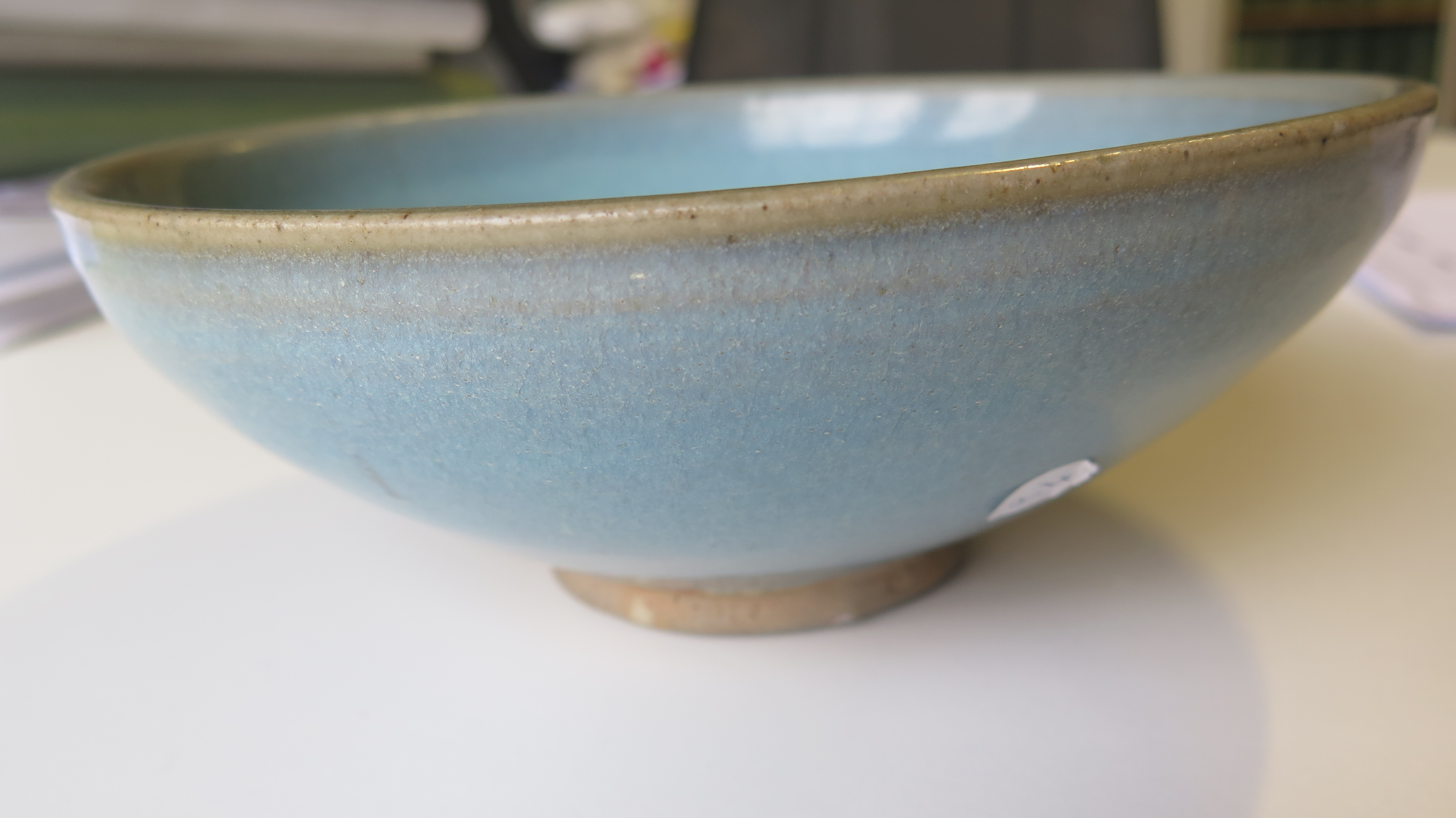
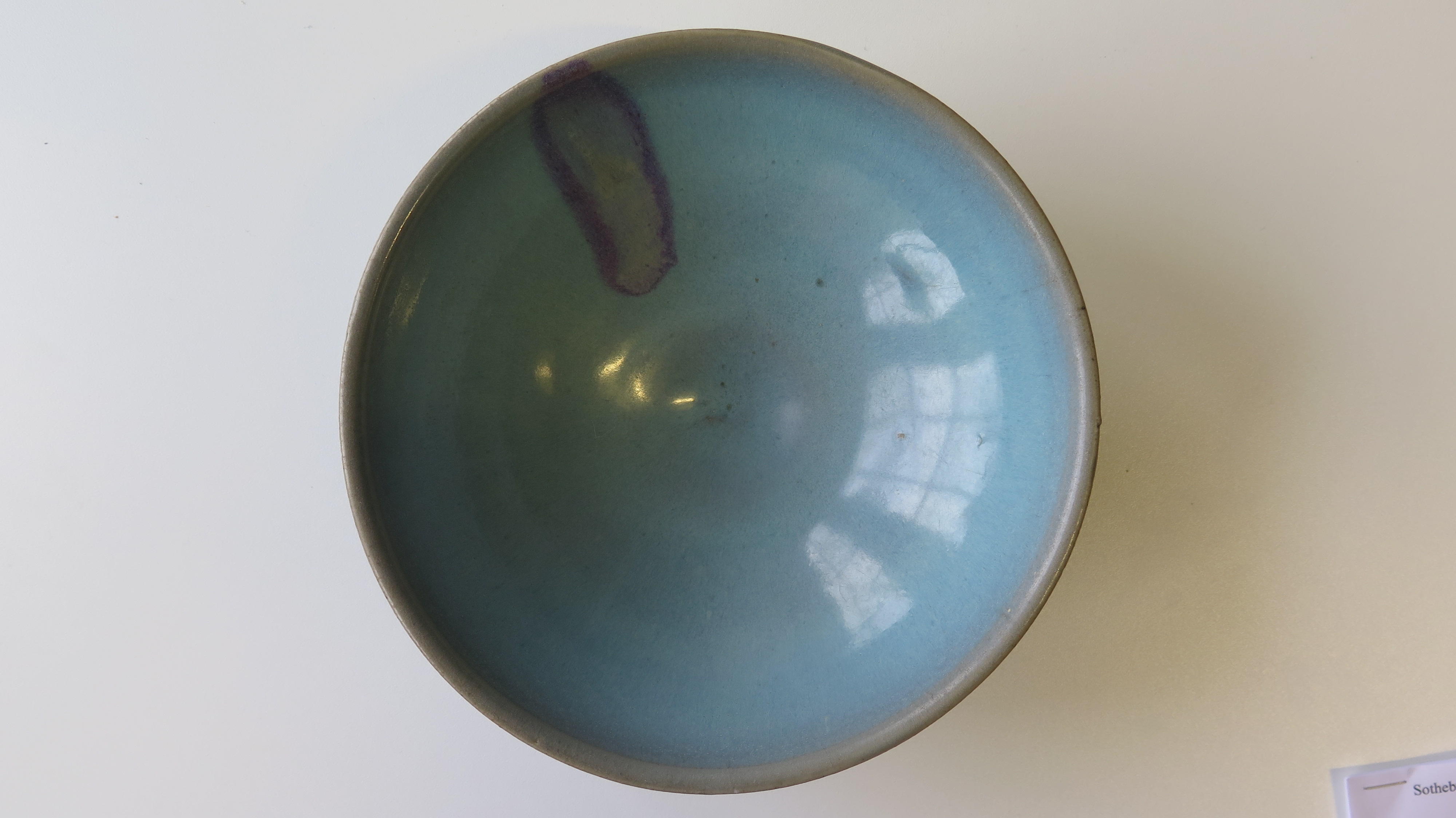
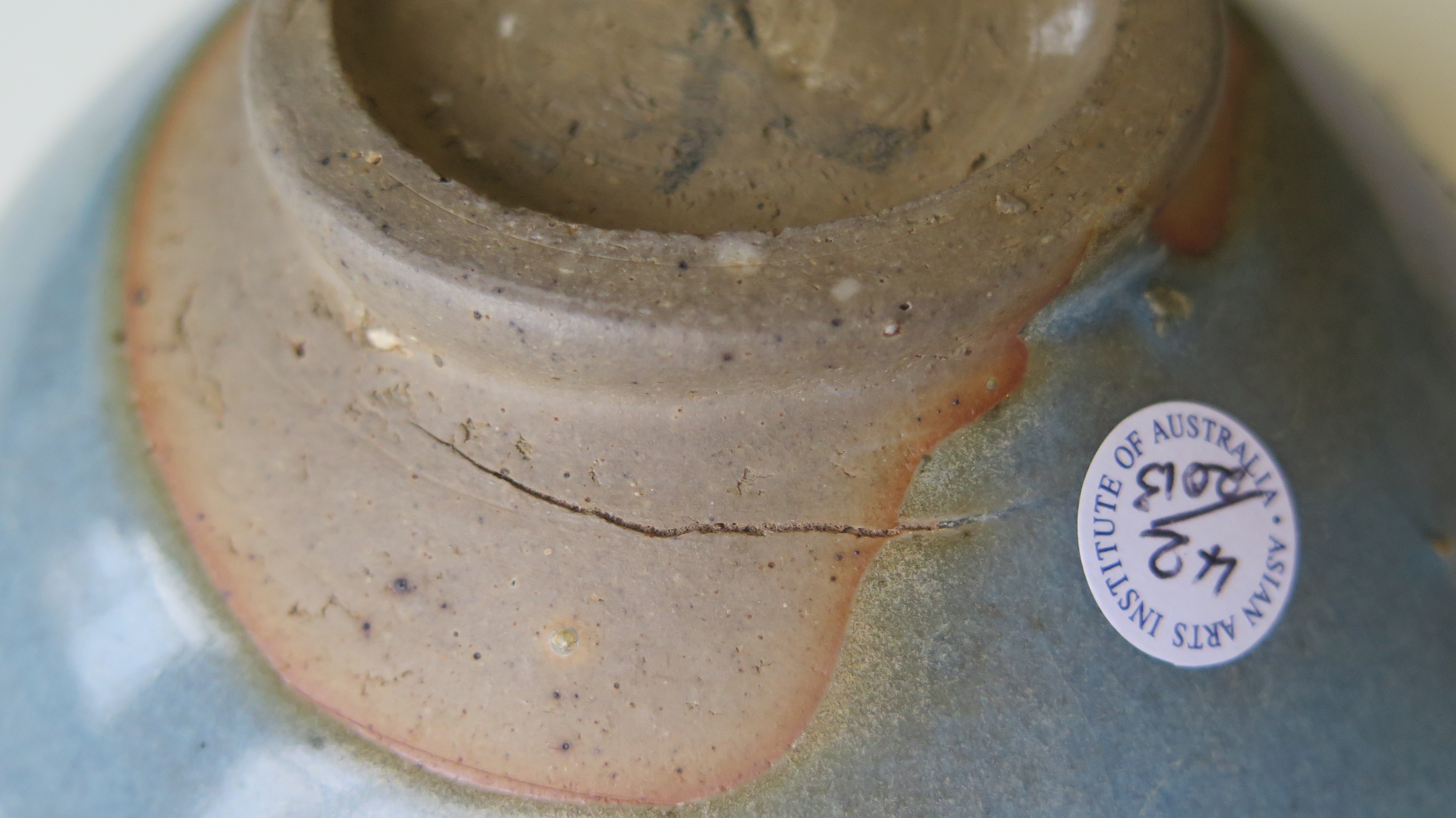
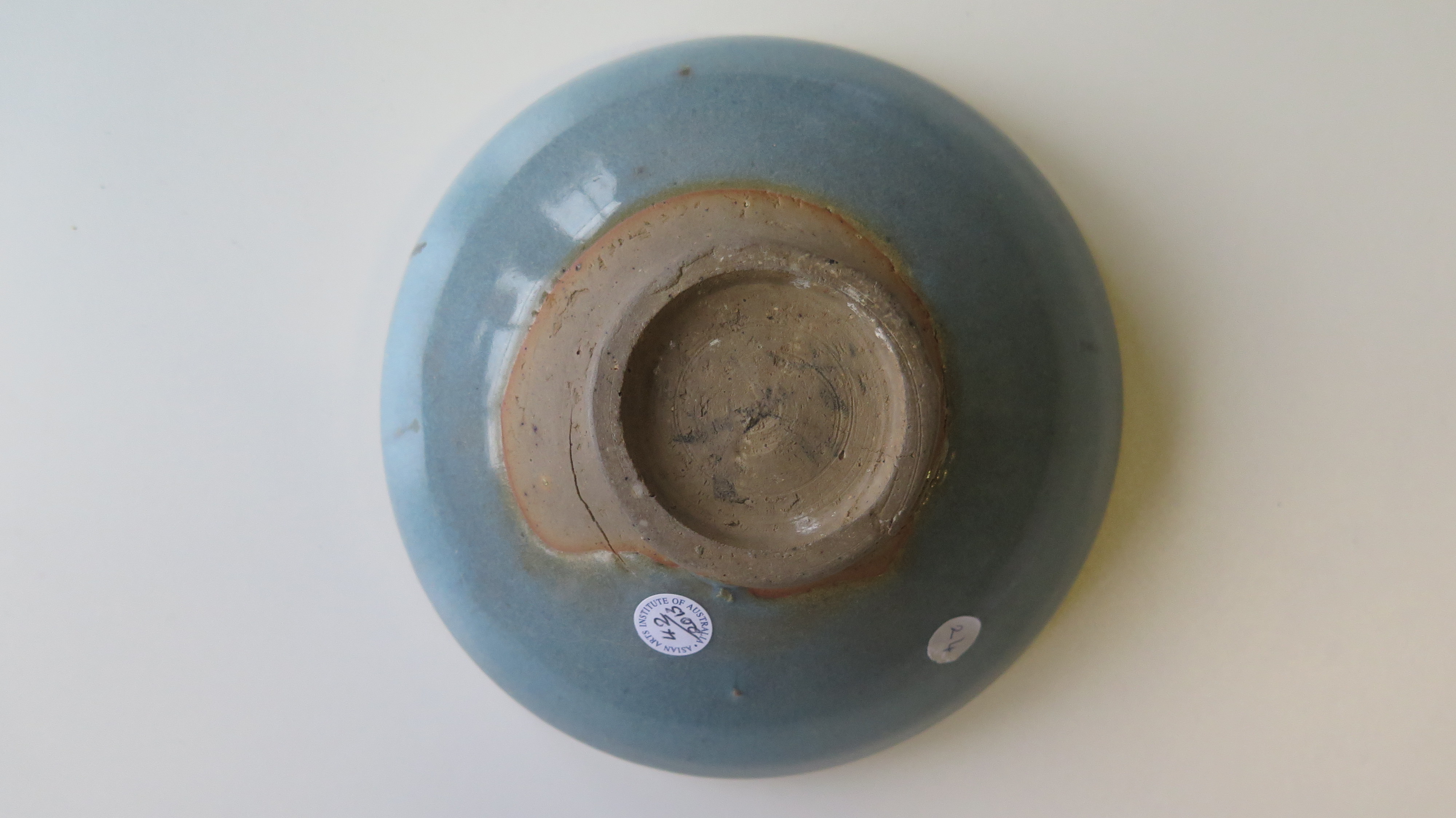
the deep rounded sides rising from a short spreading foot to a slightly everted rim, covered overall in a bright turquoise-blue glaze, the interior with a long vertical purple splash 17.8 cm, 7 in.
The bowl is in very good condition with the exception of some minor glaze firing imperfections including a 5cm.,firing hairline to the base, iron spots and some light glaze scratches.
the deep flaring sides rising from a short tapering footring to a slightly everted rim, covered overall in a dark chocolate-brown glaze irregularly splashed in cream and caramel, falling short of the base to reveal the light buff body 16.2 cm, 6 3/8 in.
The bowl is in very good condition with the exception of very minor glaze firing imperfections including tiny burst bubbles.




 Site Title